The Noble Families of Renaissance Rome: Part 4- The Medici- Bankers and Popes: Rise and Fall of the High Renaissance
Many students of the Renaissance may challenge my inclusion of the Medici in a survey of the superstar aristocratic elite of Renaissance Rome. Florence was ground zero for the family’s emergence as Masters of the Universe. Point taken, but the role and importance of the Medici entry into the power circles of Rome is underreported and misunderstood. They may have been transplants, but they became ROMAN in a big way. A good example is the highly entertaining 2018-2019 Netflix series- The Medici: Masters of Florence. It features Cosimo and Lorenzo as Renaissance Princes- handsome, politically ruthless and tireless promoters of artistic genius. It does not capture the Rome chapter where two Medici Popes presided over the High Renaissance most glittering decade and then its most catastrophic collapse. I hope to present a more comprehensive picture.
The Medici were Tuscan peasants who rose to become the pre-eminent banking family in Europe. They came from the Mugello valley north of Florence. The name translates to “doctors” although their ancestral origins in medicine are obscure and possibly invented. Giovanni Medici founded the Medici Bank of Florence in 1397. Within a generation it was the largest bank in Europe with branches from London to Constantinople and it most consequential client was the Papacy itself. The Church’s financial relationship with Medici Bank transformed both institutions. Giovanni’s son Cosimo- later called Pater Patrice, Father of his Country- consolidated the role into a political dominance so complete that one Pope noted, “Political questions are settled in his house. He is the true King in all but name.” Cosimo ruled Florence for 30 years without ever holding formal office. In his spare time, he supported master artists Donatello, Far Angelo and Brunelleschi. He also financed and built the first public library in Florence. He was an “A” player in economics, finance, politics and philanthropy.
Cosimo’s grandson Lorenzo took the family to the apogee of its influence in Florence. He was “the Magnificent” and has dominated both serious and popular portrayals of the era. He was a genuine poet, a gifted statesman and an extraordinary arts patron who became the most vivid symbol of the High Renaissance. Michelangelo came to his attention in his teens and Lorenzo treated him as a member of the family household. Botticelli, Leonardo da Vinci and Ghirlandaio all worked in the Medici orbit. The Pazzi conspiracy of 1478- backed by Pope Sixtus, which killed Lorenzo’s brother Giuliano and left Lorenzo wounded- actually consolidated Lorenzo’s leadership position in Florence. His courage was widely recognised and his public image was transformed from rich banker to a genuine public leader. Unfortunately, he died at the age of 42. At his death, the mystical and rather crazy monk Savonarola observed that the indispensable key to Italian unity and peace had been lost with Lorenzo’s passing. A shadow over Lorenzo’s legacy is that his dedication to stagecraft and culture caused him to neglect the operation of the family banking business. Corruption and mismanagement led to the collapse of the bank in 1494, only two years after his death. The same year, Lorenzo’s son Piero capitulated to a French invasion and the family was expelled from Florence. The family that had run the Florence Republic for 75 years was suddenly in exile. They did return to Florence after a decent interval - a testament to the family’s resilience and their network of powerful connections, including having a Cardinal in the family strategically placed in Rome.
Leonardo’s second son Giovanni became Pope Leo X in 1513 at the age of 37. He had been appointed as a Cardinal when he was 13. He is the touchstone for the Medici Roman phase. He was, by all historical accounts an enormously charismatic and charming fellow. He was well educated, a cultivated man who loved music, literature, theatre and the company of scholars. He reportedly declared on his election, “Since God has given us the Papacy, let us enjoy it.” Under Leo, Rome became the cultural capital of Europe. Raphael completed his greatest work at the Vatican and construction on St Peter’s accelerated. The Papal court was a center of humanist learning and spectacular entertainment. Leo kept a pet albino elephant (Hanno) on site. It had been a gift from the King of Portugal and Leo supposedly went into depression when his elephant’s died. There were some striking downsides to Pope Leo’s leadership style. Although an heir to the premier banking family in Europe, he was an awful manager of Vatican finances. His spending extravagance emptied the treasury. Leo responded by expanding the sale of indulgences in an effort to increase church revenues. He commissioned a Dominican friar to market the indulgences aggressively in Germany. He ran afoul of an offended Augustinian monk named Martin Luther who went on to publish his Ninety Five Theses. Leo misread the situation completely and dismissed the controversy as a “monk’s quarrel.” Things accelerated quickly and Leo excommunicated Martin Luther in 1521. The Protestant Reformation spread like a hurricane and became an unstoppable movement that tore the Western Catholic Church apart. Not good Leo!!!
Medici Pope No 2 is Clement VII. Giulio De Medici, the illegitimate son of Lorenzo’s murdered son Giovanni became Pope Clement VII in 1523. He was more experienced than Leo and a better administrator, but a poor strategic thinker plagued by indecisiveness. His Pontificate was one long series of political crises. He vacillated between the two key political players of the time- Charles V of the Holy Roman Empire and Francis I of France. Both lost patience with him. In 1527, Charles’ troops breached Rome’s walls. The Swiss Guards were annihilated, but bought the Pope enough time to flee the Vatican using the Passetto di Borgo- the secret fortified corridor connecting the Vatican to Castel San’t Angelo. Clement watched Rome being destroyed from the battlements on the roof of Castel San’t Angelo. Churches were desecrated, Cardinals held for ransom, the Tiber filled with bodies and graffiti proclaiming “Martin Luther” was scrawled on the walls of Raphael’s Stanze. The Sack of Rome lasted months and went it concluded, Renaissance Rome was finished. Clement was held prisoner for 6 months, ransomed for 400,000 ducats and crept back into a traumatised city. His subsequent dependence on Charles V had one further catastrophic consequence for the Catholic Church. Unable to offend Charles, he refused to annul Henry VIII’s marriage to Catherine of Aragon- who happened to be Charles’ aunt. The result was the English reformation. The Pope’s paralysis severed England from Rome permanently. The reigns of the two Medici Popes led to modern Protestantism. Don’t say the family is only a Florence phenomena. The influence on Rome and Europe as a whole is overwhelming.
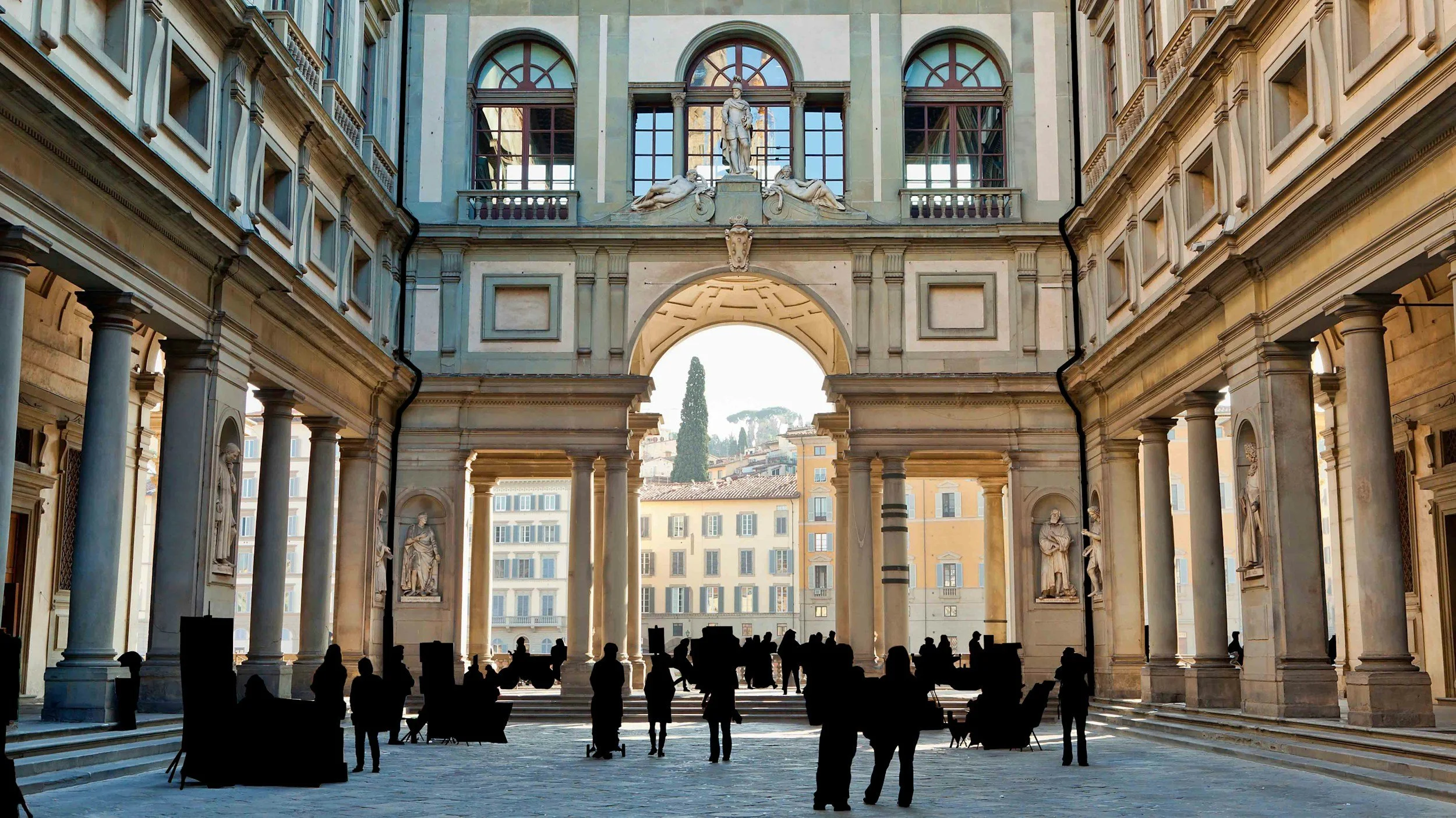
The political legacy of the Medici is learly a mixed bag. The artistic legacy is a different story. In Florence, the Uffizi Gallery houses the greatest collection of Italian Renaissance paintings in the world. The Medici Chapel features Michelangelo’s tombs of Giovanni and Lorenzo. The Laurentian Library, also designed by Michelangelo has an extraordinary staircase which is one of the defining architectural statements of the Renaissance. In Rome, the family’s monument is the Villa Medici on Pincio Hill, just above the Spanish Steps. Acquired in 1576 by Cardinal Fernando Medici, it was a showcase for an extraordinary collection of ancient marbles. Much of the collection was eventually moved to the Uffizi in Florence, but the Villa Medici is still worth a visit. There are guided tours and the panoramic views from the terrace are some of the finest in Rome. A bonus is Villa Medici is less crowded than many of the other major tourist attractions in the city.
The Medicis are a magnet for popular culture and serious historians. Paul Strathern’s The Medici: Godfathers of the Renaissance is authoritative, readable and unsparing in detailing the dynasty’s failures alongside its triumphs. The above referenced Netflix series is fun and captures the essential elements of the family narrative- with obvious artistic license. Christopher Hibbert’s The House of Medici: It’s Rise and Fall is a user friendly volume and is particularly good on how the Medici and Della Rovere art collections all converge at the Uffizi. Fascinating family- Lorenzo is my favourite.