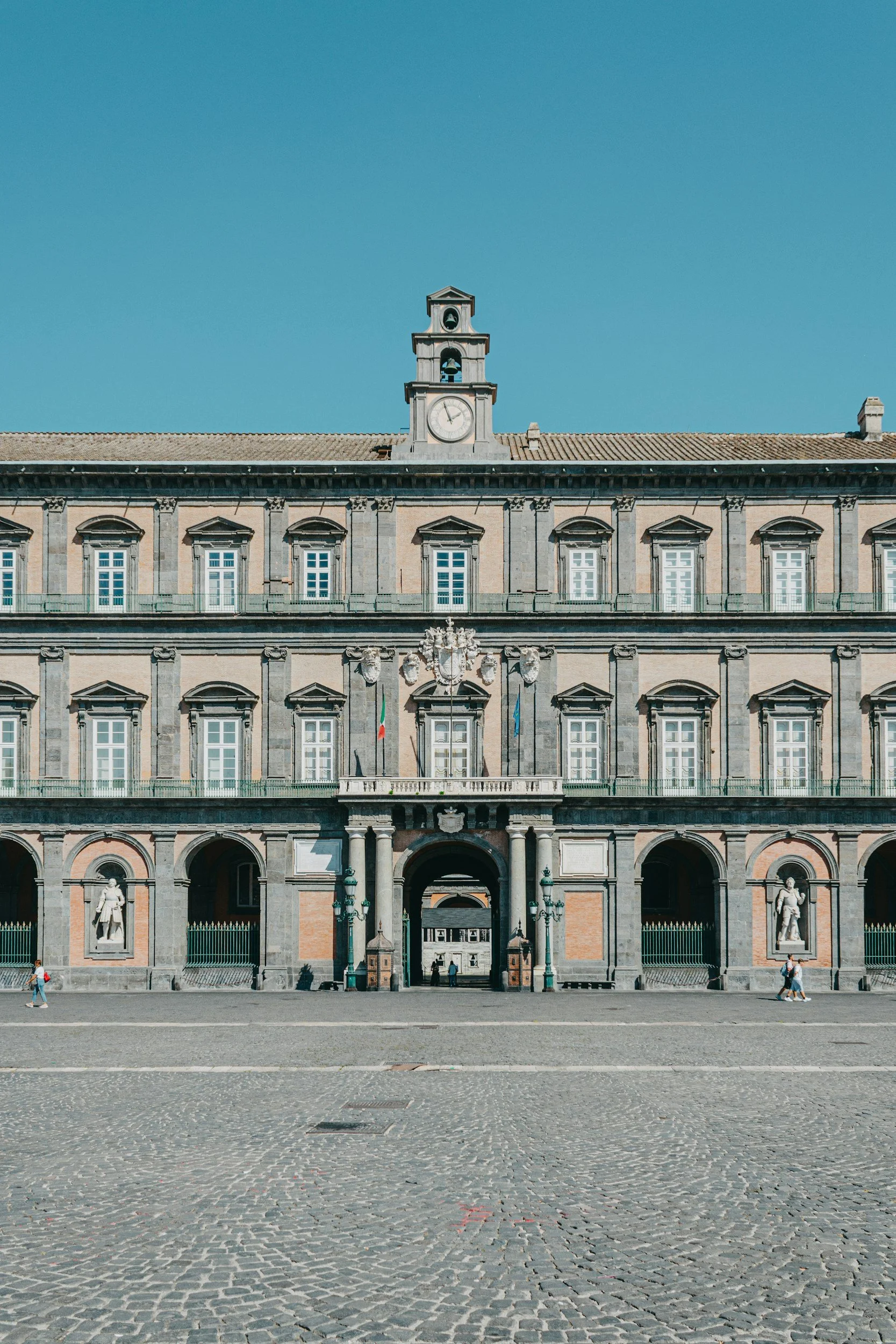
Palazzo Farnese is the most renowned Renaissance palace in Rome. It is must see and tours are available by online appointment. It currently serves as the French embassy. It is an architectural marvel. Four of the greatest artists of the age worked on it- Sangallo, Vignola, Giacomo della Porto and Michelangelo. Its gallery ceiling was frescoed by Annibale Carraci and is recognised with the Sistine Chapel and Raphael’s Stanza as the supreme achievements of Roman painting. To understand what you are looking at during your visit, you need to embrace the Farnese family story- one that begins with a beautiful girl’s relationship with a Borgia Pope, passes through the Council of Trent and ends with a Spanish Queen.
The Farnese journeyed from provincial Lazio to the peak of power and influence in Rome. They were not outsiders like the Della Rovere of the Borgias. They traced their lineage to feudal holdings in Lazio held since the 10th century. By the medieval period ,they were the established lords of Lake Bolsena and Orvieto. Their influence rose steadily as they made prudent choices by picking the winners in Italian factional wars. Ranuccio the Elder was Commander in Chief of Papal troops and earned a Senatorship from Pope Martin V. In the traditional Italian style of familial advancement, his descendants made shrewd marriages into the Orsini and Colonna families, successfully weaving the Farnese into the heart of Roman aristocratic life.
What elevated the family from respectable nobility to Papal dynasty was something more personal- the beauty of Giulia Farnese. In 1489, the fifteen year old Giulia married Orsino Orsini, a close friend of the Spanish Cardinal Rodrigo Borgia. Within months of her betrothal, she became Borgia’s mistress. When Borgia became Pope in 1492, her brother Alessaandro received the Cardinal’s red hat, Contemporaries were not subtle about the connection; they called him the “Petticoat Cardinal” and it was not a compliment. Underestimating him was a spectacular miscalculation. Alessandro Farnese played the long game brilliantly. He was a Cardinal for 41 years and served under six Popes. He gradually accumulated wealth and influence. He was educated at the court of Lorenzo di Medici in Florence. He then built the Palazzo Farnese. He fathered 4 children by a Roman mistress and then crafted a reputation as an institutional reformer. He was passed over for the Papacy twice but was finally elected unanimously in 1534 at the age of 66. Instead of being a transitional leader or figurehead, he ruled for fifteen years and made history.
Pope Paul III was a unapologetic fan of nepotism. Within 2 months of his election, he made his 14 year old grandson a Cardinal. He created the Duchy of Parma and Piacenza from Papal territories and appointed his illegitimate son Pier Luigi as the Duke. One of my favourite restaurants in Rome today is named after Pierluigi. I wonder if the owners know he was a brutal leader who was eventually assassinated by his own subjects. However, the same Pope called the Council of Trent in 1545 which resulted in reforms which would govern Catholic doctrine and practice for the next four centuries. He recognised the Society of Jesus, overcoming his initial suspicions of the ambition Ignatius Loyola and chartered the Jesuits as a direct instrument of Papal authority. The Jesuits certainly ran with the assignment. He restructured the College of Cardinals and appointed a generation of reforming Cardinals. Bribery and priests and Cardinals fathering a bevy of children went out of fashion under the new rules. He commissioned Michelangelo’s Last Judgement for the Sistine altar wall and also set Michelangelo to work on the final stages of St Peter’s Basilica and Palazzo Farnese. Paul II also retained Michelangelo to redesign the Piazza del Campidoglio which had fallen into such disrepair that it was known as the “goat hill.” Michelangelo’s transformation of the site into a great civic space is one of the defining acts of Renaissance urban design. Another must see on your upcoming trip to Rome. Historians argue that Paul III was simultaneously the last Renaissance Pope and the first Pope of the Counter- Reformation. Both are accurate. Paul III may not have been as beautiful as Giulia but he is definitely the most historically consequential Farnese.
The Farnese legacy is inextricably linked to their incredible art collection. Palazzo Farnese displays some of its leading works, including masterpieces by Titian and Raphael. The classical sculpture collection at the Palazzo is breathtaking. A biological detour occurred when the Farnese male line expired in 1731. Stuff happens! The art collection passed to Elisabeth Farnese, the Queen of Spain and her husband’s family, the Bourbon Kings of Naples. The art family focus shifted from Rome and the majority of the Farnese collection is now the heart of the Capodimonte Museum in Naples- another world class museum that must be on your bucket list. The art collection is definitely a key component of the Farnese legacy. Pope Paul III’s legacy is more ambiguous. The Council of Trent and the Jesuits are on the plus side while carving up the Papal territories among his family members is on the other side of the ledger. His Papacy was groundbreaking but also typical for the time. The Renaissance was an age of genius and enormous corruption. To his credit, Pope Paul III initiated the reform process and the Palazzo Farnese still stands in all its glory. Alas, the French occupy it now!
The Farnese have not inspired popular culture to the same degree as the Borgias, undoubtedly because Rodrigo, Cesare and Lucrezia are just better copy. Giulia Farnese is a significant character in The Borgias Showtime series and she is captivating in Sarah Dunant’s Blood and Beauty. The Farnese art collection has a compelling after life: the Farnese Hercules and the Farnese Bull, great classical sculptures that now anchor the Capodimonte Museum are among the most reproduced ancient works in Western art history, appearing in drawings by Rubens and Winckelmann. For broader context and a good reference for all the noble families I am featuring in this series is Anthony Majaniathi’s The Families Who Made Rome. It has nice chapter on the Farnese and functions as a user friendly companion guide for anyone sending quality time in the city.