“The Director” by Daniel Kehlmann
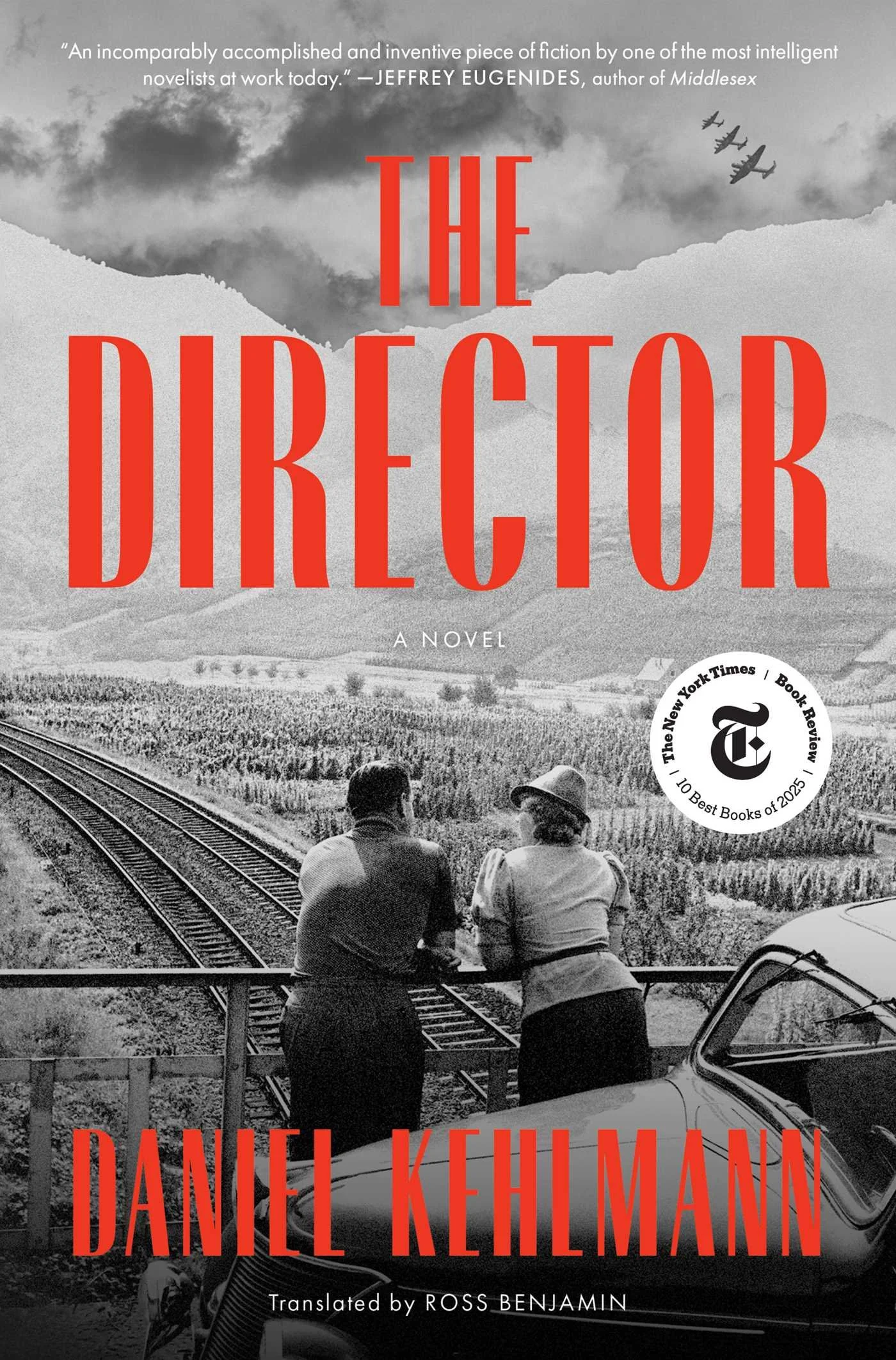
Daniel Kehlmann’s The Director is a novel that seized me completely. It is taut, arresting, horrifying, unnerving, stunning and sorrowful. I discovered it through an avalanche of outstanding reviews- The New York Times, The Washington Post, The Wall Street Journal, The Boston Globe, The New Yorker and The Atlantic all praised it in 2025. When so many prestigious outlets converge in their enthusiasm, downloading the book to my Kindle is a low risk proposition. I knew of Kehlmann’s work and reputation from Measuring the World and Fame, but this was my first experience reading him. The Director deserved its critical acclaim.
The novel is loosely based on the life of G.W. Pabst, one of the great German film directors of the 1920’s and early 30’s. He worked with Greta Garbo and Louise Brooks, earning his nickname “the Red Pabst” for his leftist sympathies and socially conscious movies. When Hitler took power, Pabst emigrated to the United States with his wife and family, joining the exodus of German and Austrian talent that transformed Hollywood. But Kehlmann’s Pabst struggles in America-language barriers hamper him and Hollywood’s commercialism proves a poor fit for his artistic temperament. His wife Trudy makes an easier adjustment to America. Kehlmann seductively populates his vision of 1930’s Hollywood with cinema legends Billy Wilder and Fred Zinneman and also shows Pabst’s friendship with fellow German master Fritz Lang. The Hollywood chapters have a lighter touch, satirical and sharp about American superficiality and worship of the almighty dollar. Good stuff!
Kehlmann invents a son for Pabst- Jacob- and this invention proves crucial to the novel’s devastating second movement. When Pabst returns to Europe with the family to visit his ailing mother, World War II breaks out and the family is trapped in Germany. What follows is a chilling chronicle of surviving under Nazism. I have read extensively on the Nazi era- the Hitler biographies and the endless library of works on the nature of the war and the Holocaust. A weakness in this vast literature is the relative scarcity of works exploring how average citizens functioned the amidst moral and intellectual degradation and horror. The most important work in this genre-one that holds an honoured spot in my library- is Victor Klemperer’s two volume diary, I Will Bear Witness: A Diary of the Nazi Years (1933-1941; 1942-1945). Published in Germany in 1995 and translated into English in 1999, Klemperer’s diaries became international bestsellers. Overall though there remains a scarcity of series works on how life life unfolded on the ground in Germany from 1933 to 1945. The Director is an important addition to this literature.
Klemperer was a Jewish professor in Dresden and he documents the incremental destruction of personhood under the Nazi regime- the daily humiliations, the progressive legal restrictions and the psychological warfare of living under constant threat. His diaries captured how totalitarianism dismantles individual identity through relentless pressure. The Director tells a similar tale. Though Klemperer faced the Nazi machinery as a Jew marked for destruction and Pabst was not Jewish, both show us a victim’s perspective. Kehlmann shows how personhood can be destroyed by making the thousands of small compromises that seem necessary for survival. The Nazi state dehumanised everyone it touched, not just its designated victims but also those who thought they could navigate its demands without losing their souls. Kehlmann’s portrait of the Pabst family experience is compelling. The mechanics of complicity are presented with a stunning clarity.
Pabst’s depressing reality is presented in vivid colours. His immediate interaction with the working class caretaker of his family estate is horrific. The attitude and behaviour of his Nazi employee offers a prime example of why Nazism thrived in Germany. The caretaker embodies the petty resentments and poisonous grievances that the regime weaponized so effectively. This is a populace rife with religious, ethnic and class jealousy and hatred. Equally important are Pabst’s professional choices which Kehlmann presents through amazingly disturbing interactions with Joseph Goebbels and Lena Riefenstahl, two of the regime’s most prominent cultural figures. The dialogue in these scenes is brilliant and the atmosphere crackles with tension. Kehlmann describes how pressure is applied, how resistance erodes, how one compromise leads to another until you no longer recognise yourself. There is even weird contact with P.G. Wodehouse, the British writer who made ill advised broadcasts from Germany- a quasi collaborator whose naïveté proved almost as dangerous as malice.
Back home, Trudy endures her own form of ideological suffocation through an insane women’s book club that only meets to applaud insipid works about the glories of the regime. Nazism as Romanticism! These scenes are dark and absurd and shows how tyranny infiltrates even the most mundane social rituals. Meanwhile, Pabst as a Director is making movies approved by the Nazi government. We see subtle examples of his gradual capitulation. He continually tells himself that he is surviving, protecting his family and that the films are purely commercial and won’t to any lasting harm. The eventual loss of his moral compass happens incrementally- so subtle that you almost don’t notice it. But then you do and it is frightening. Finally, the most disturbing storyline is the brainwashing of Jacob, the fictitious Pabst son. Watching a young person slip completely into Nazi ideology, absorbing the lies, embracing the hatred and becoming unrecognisable to his parents serves as a stark warning. An entire generation can plunge into the abyss with terrifying speed when surrounded by lies and nonsense and when propaganda becomes the only available truth. SOMETHING TO THINK ABOUT PEOPLE!
Kehlmann also highlights the importance of artistic resistance. Pabst attempts to craft a film of subtle defiance in the closing stages of the war. The supreme irony is that the film is lost. His one clear act of moral courage literally disappeared. The metaphor is rather poignant. An attempt at moral witness can vanish and your legacy will be shrouded in ambiguity. I have empathy for Pabst. He is no Lena Riefenstahl or Alfred Karrasch- shameless sellouts who embraced the regime enthusiastically. Pabst is something more complicated- a man trying to survive and making calculations hoping to outlast the madness. Kehlmann refuses to let him off the hook, but also refuses simplistic judgement . The novel understands that most people are neither heroes or villains, but something murkier- fearful, sometimes cowardly, easily compromised and always human.
The Director is beautifully crafted. Kehlmann’s prose is clean and crisp and the narrative never loses momentum. It is forceful and powerful. It is a significant achievement. I recommend it highly.