The Best Movies of the 21st Century (No 19): 1917 (2019)
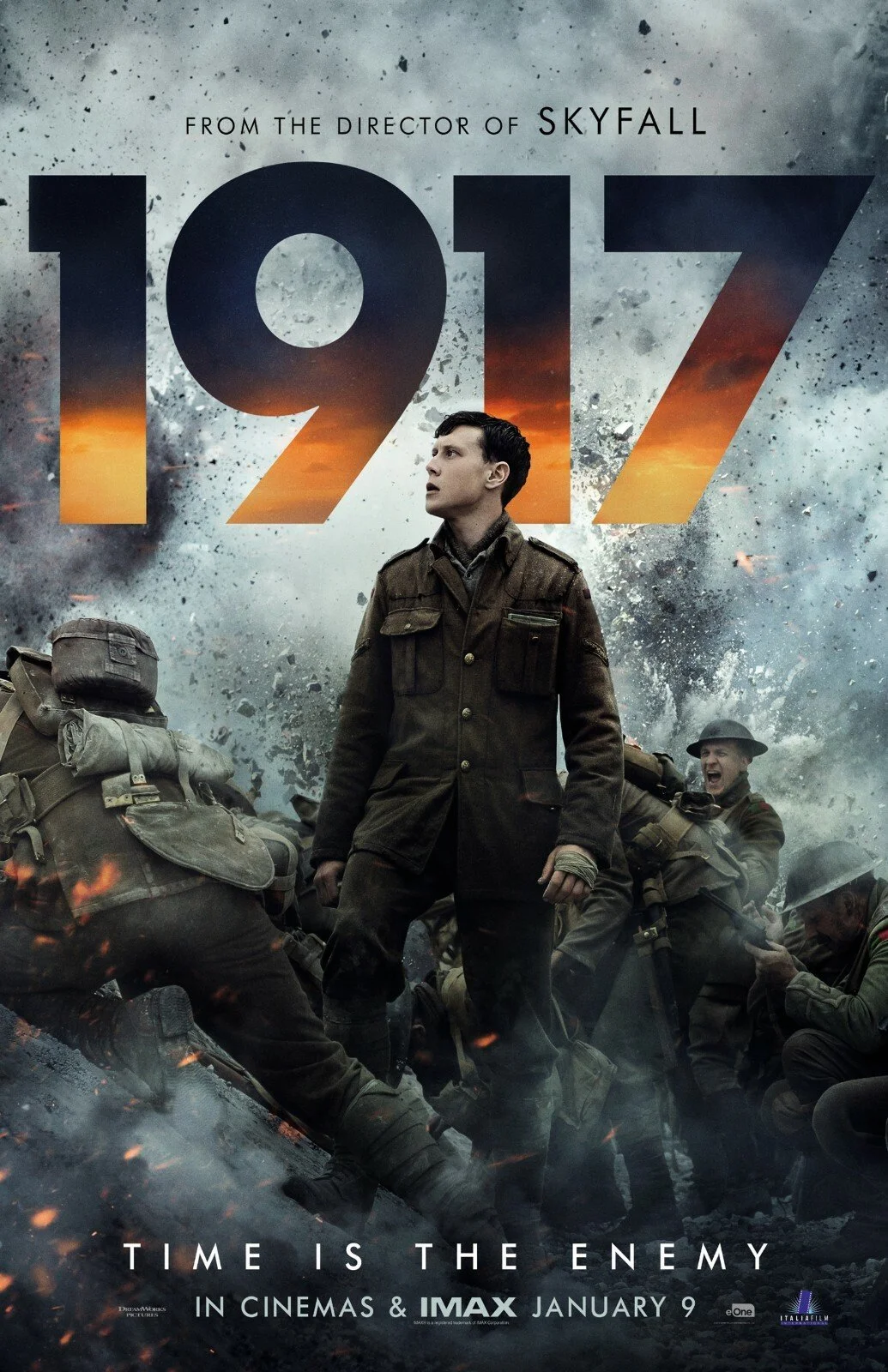
Sam Mendes 2019 film “1917 is a masterwork. It was marvelous and thought provoking. We saw it on the big screen. It was something rare- a war film that was simultaneously a technical marvel and a profound moral statement. The movie was gripping and watching it in a dark theatre, one could feel a collective tension in the audience. At times, I was holding my breath. By the end, I was emotionally exhausted and felt relief. Mr Mendes had nailed it- a major achievement- he made us intimately experience the dread and horror of World War I.
Mendes had a track record. He made an astonishing debut with American Beauty, which won five Academy Awards, including Best Picture and Best Director. He then showed remarkable range with a series of critical and popular successes: Road to Perdition, Revolutionary Road, and then revitalised the James Bond franchise with Skyfall and Spectre. Yet 1917 was a radical departure from his earlier work. Inspired by stories Mendes’ grandfather had told him about World War I, the film became an opus on the brutality and insanity of war. He hired legendary cinematographer Roger Deakins and Deakins proceeded to win his second consecutive Oscar for 1917. The film is a series of images of vivid and never ending devastation. A.O Scott of The New York Times wrote, “Deakins images have a formal beauty that throws the horror into harrowing relief.”
My recognition of the movie as a personal favourite is not a particularly courageous or unconventional selection. 1917 was a critical darling and a box office phenomenon, grossing 384 million dollars worldwide. The Guardians’ Peter Bradshaw gave it five stars, declaring it “A
war movie to forget every other you’ve seen.” At the Academy Awards, 1917 received ten nominations and it also swept the BAFTA Awards with seven wins including Best Picture. It also won the Golden Globe for Best Picture. The film is technically unique because it unfolds in a single continuous take. It was conscious choice by Mendes. He does not allow you to cut away from the horror. It is relentless.
The technical form of the film elevates its message. The First World War was civilisational suicide. The old European order, the ancient empires- destroyed themselves in four years of mechanised slaughter. The numbers are staggering with 20 million dead and 20 million wounded. Four empires collapsed and the Victorian and Edwardian world gave way entirely. 1917 made this catastrophe visceral. When the two main characters Blake and Schofield traverse No Man’s Land, we see the complete obliteration of any recognisable or human world. Trees are splintered stumps, the Earth is cratered and poisoned and European civilisation has been reduced to mud, filth and death. We see dead horses tangled in barbwire, corpses in flooded and abandoned trenches and a total of rupture between the living and the dead.
There are several poignant episodes as the young army messengers strive to execute their rescue mission. We see the war’s impact on civilians through their encounter with a French woman and an infant. They are hiding in a bombed out cellar and are starving and terrified. When Schofield gives her his food and milk, Mendes is showing one human acting nobly amid utter destruction. The nature of war’s assault on innocent civilians has never been shown more powerfully. As critic Manola Darghis noted, “It distills the entire war into a single image of what been lost and what is worth saving.” Equally powerful is the chilling sequence involving the interaction between Blake and Schofield and a German aviator. This sequence represents the complete breakdown of civilised codes governing warfare. Blake and Schofield heroically rescue the pilot from his burning plane and the German responds by stabbing Blake in the gut. This shatters any illusion that chivalry is still of value in wartime. Instead, we see betrayal. Schofied then swiftly executes the pilot and the audience must conclude the killing is justified. But the message is damning- mercy is punished and attempts to establish trust with adversaries is foolish- even suicidal. We then witness Blake’s slow and agonising death. He bleeds out whispering for his mother and we see the war’s human cost- boys dying far away from home and usually for nothing. COMPELLING!
Mendes also vividly portrays the callowness and failures of the Officer leadership class in WWI. Colin Firth plays an upper class general who sends Blake and Schofield on their mission with a disturbing detachment- he speaks of the mission to save 1600 men as if they were chess pieces on a board. At mission’s end, we need Benedict Cumberbatch’s Colonel who is even harder and more cynical. When Schofield delivers the message that the attack must be called off, the Colonel complies with visible reluctance. He desperately wanted the attack to go forward and rued the missed opportunity for his men to be come heroes on the battlefield. The officers were applying 19th century concepts of honour to 20th century mass death warfare. INSANE! As John Keegan wrote, “The First World War was tragic, not just because so many died, but because they died for so little- or for concepts so abstract they lost all meaning in the mud.” What does courage mean when you can be killed by artillery fired miles away?
Schofields character is everyman. He is an average dude in an impossible situation. In no way is he a classic warrior. He is a wartime mail man! His climatic run across the battlefield to deliver the stand down message is the film’s emotional apex. He just runs, gasping and desperate- operating on pure survival instincts. He succeeds in his mission. But for what larger purpose? When the film ends, Schofield rests beneath a tree, pulling out photographs of his family. After everything he witnessed- death, devastation- here is one man who is still able to remember that there actually is a good life beyond this wasteland. Powerful but sad because ultimately a new battle will follow, a new attack, another stupid order. The film brilliantly demonstrates that World War I was an odyssey without meaning- a journey whose only destination was more death, more suffering and more human folly.
I walked out of the theatre grateful to step into sunlight and peace, but I won’t forget the images. 1917 is a great film because it makes us see what we always suspected- WAR IS HELL!