The Best Movies of the 21st Century (No 16): PARASITE (2019)
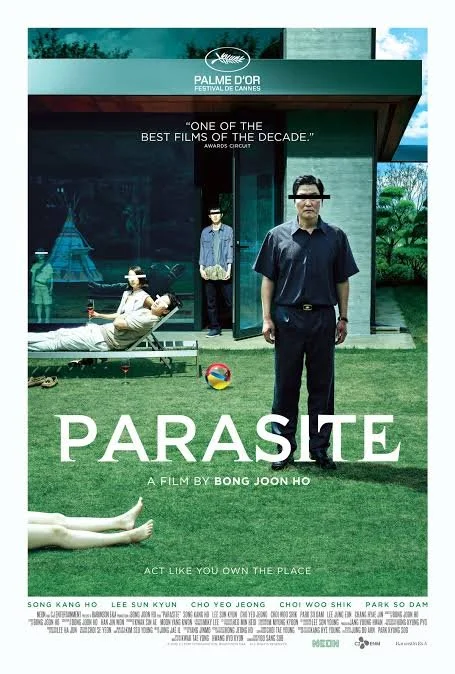
Montaigne, my philosopher confidant, believed that the “world is but a perpetual seesaw.” This truism is an apt description of Boon Joon-ho’s 2019 masterpiece Parasite. It is a film featuring head spinning contrast and oscillations; between rich and poor, comedy and tragedy and sympathy and horror. The director brilliantly controls the tone and flow, but the audience can be excused if it experienced vertigo like symptoms when watching this film. If you enjoy volatile plot surprises and emotional mood swings, this is the film for you. There is a lot going on here. I adored it!
What struck me most is how thoroughly the movie resists an easy genre classification. It refuses to be one thing. It is dark comedy. It is a stinging social satire. It is, by the final act, a classical Shakespearean tragedy. It is Hitchcockian in its management of suspense and drama. A pure satire would have let us off the hook with irony. A pure tragedy would have flattened the humour that makes the film so alive. Bong wants to capture both simultaneously and he achieves it to a five star level. The craftsmanship is extraordinary. The cinematography is stunning in the way it reveals the geography of class differences. The claustrophobic and chaotic semi basement flat of the Kim family is a shocking contrast to the idyllic, spectacular hilltop mansion owned by the Parks. The images vividly transmit the inherent societal inequality before you even begin to process the reality intellectually. The musical score is genius in its violent tonal swings, matching the rapid twists and turns of the plot. The editing is wickedly efficient and the dialogue is precise. Nothing is wasted here production wise, Parasite is a tight thrill ride from beginning to end.
Be warned, the movie is unsettling and disturbing. Boon opted for a challenging structure. The movie actually gets funnier as it grows more cruel and hardhearted. The Kim family’s infiltration of the Park household is staged originally as a caper. It is witty, deft and almost farcical in its escalating absurdity. Bong then goes to the dark side, but the comedy never really stops as the stakes turn savage. The laughter becomes inseparable from the brutality. Instead of comic relief, we venture into the theatre of the absurd. It is complicated because the continuing humour implicates the audience. We are still laughing even we know we probably shouldn’t be.
I love the subtle nuances in the film. The easy thematic version of the story writes itself. We have clueless and entitled wealthy people exploiting the desperate poor. Very bolshevik! That film is an element of Parasite but it is only one layer. The “richer than God” Parks are smug in ways that are damning. They make casual class assumptions and engage in offhand acts of cruelty. They proclaim their disgust at the unpleasant smells they associate with the lower classes. It is a strong indictment of the noveaxu riche! BUT Bong doesn’t let them collapse into caricature. The Park wife is kind, if oblivious. The daughter is naive rather than malicious. The father truly loves his son. The marriage may look plastic on the surface, but there is a real family there. They are not hollow people.
Crucially, Bong extends the same complexity to the Kims. Their loyalty to one another is admirable and their ability to survive in awful living conditions earns our sympathy. They actually live below street level, are at constant risk of sewage flooding into their apartment and they earn a wage by folding pizza boxes for delivery company. However, the film does not romanticise poverty as a moral education. Being poor doesn’t make you good! The Kims are cunning, opportunistic and regularly dishonest. They scheme their way into the Park household through deception and destroy the livelihoods of other working class people in a very calculated fashion. Bong seems to be arguing that poverty doesn’t confer virtue any or that wealth is always built on vice. Instead, your economic status just creates a field of available choices and people, being human, just grab the best deal. The film is about class warfare, a topic that has been the subject of cinema for a century, but I don’t know whether it has ever been dramatised with so much nuance or so little mercy. Montaigne sums it up well, “there is no man so good, were he to submit all his thoughts and actions to the laws, would not deserve hanging ten times in his life.” I like how Bong distributed virtue and vice more or less evenly among his characters, not simply defaulting to where you fall on the economic ladder. He doesn’t decide which family is good. Instead, he reveals a societal structure that makes a collision between them inevitable
A few fun facts about the Director Boon Joon-ho since he is someone we should follow closely in the future. He was born in 1969 in Daegu, South Korea, studied sociology at Yonsei University, before transferring to the Korean Academy of Film Arts. South Korea has made it’s cinema industry a priority. His prior films, Memories of Murder, The Host, Mother, and Snowpiercer share the same mixture of dark comedy and sudden plot shifts that reached full maturity in Parasite. He produced this movie with a budget of 11 million dollars and went on to gross 258 million worldwide. This is a remarkable return for a subtitled Korean production with no international movie stars. It premiered in Cannes in 2020 and on release in the United States became the highest grossing foreign language film in years. Globally, it is the highest grossing south Korean film in history.
Again, my selection here is not unconventional. The critical reception was close to unanimous. The New York Times, the Wall Street Journal described the movie as “wildly entertaining” and “horribly fascinating.” Parasite swept the awards season as completely as any film in recent memory. It won the Palme d’Or at Cannes, and Best Picture at the Oscars. It also won the Academy Award for Best Director and Best Screenplay. It also dominated at BAFTA, the Golden Globes and the Screen Actor’s Guild selections. A smashing success. I urge you to see the movie if you missed it on original release. I actually saw the movie a week before the March 2020 Covid shutdown and opportunities to see the film dried up during the lockdowns. Search it out and I promise a unique and satisfying cinematic experience.