The Best Movies of the 21st Century (No 17): A SEPARATION (2011)
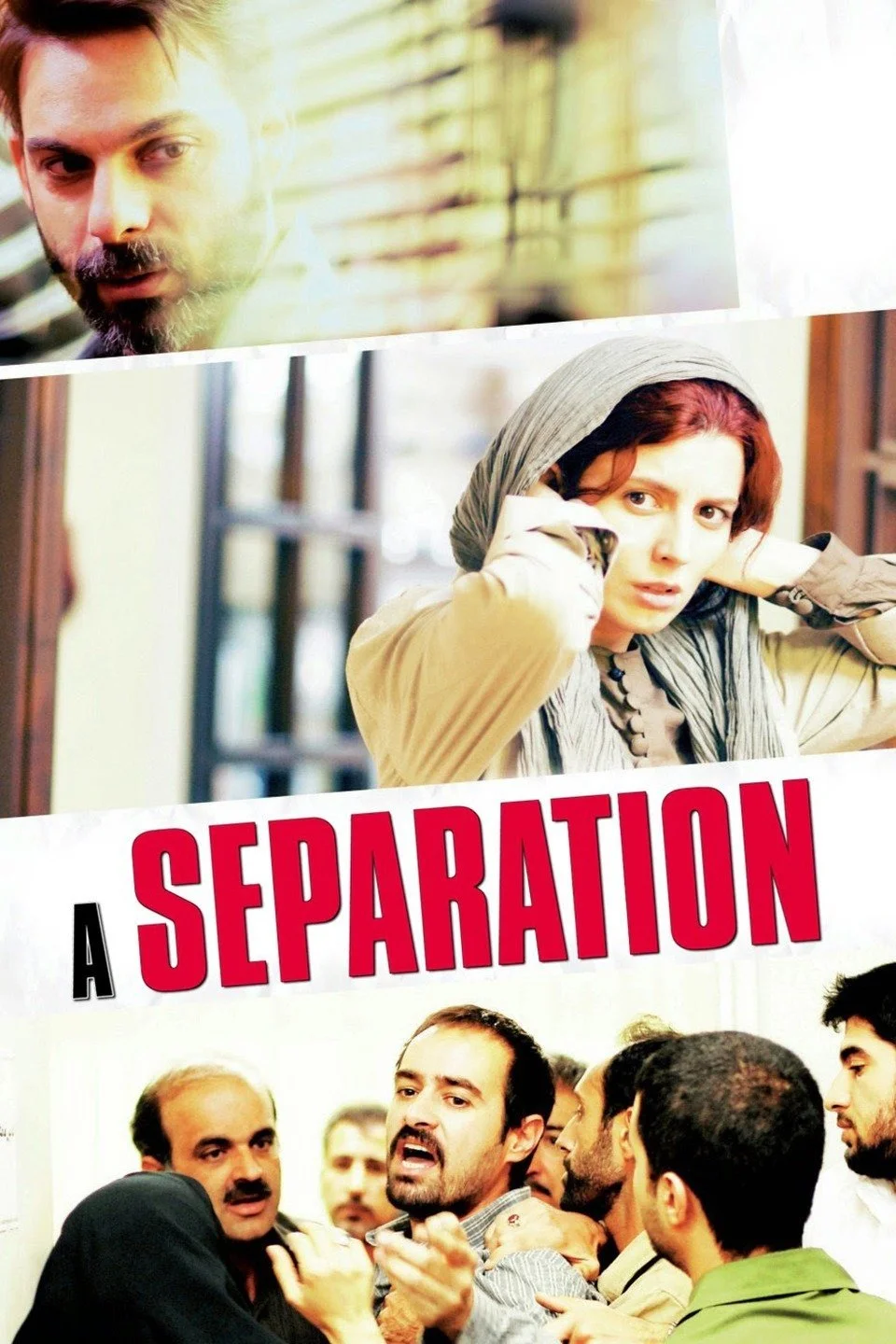
Honoree No. 17 is A Separation. We now go international and venture into exotic territory. This is a 2011 Iranian movie directed by Asghar Farhadi. He was born in 1972. He earned a degree in Dramatic Literature form the University of Tehran and a Master’s in Stage Direction from Tarbiat Modares University. He then spent years writing radio plays and directing Iranian television novellas. He has always resided in Iran. In 2009, he made his first feature film, About Elly and won the Best Director Award at the Berlin Film Festival. A Separation was his fifth movie and is the work of a Director who has patiently learned his craft. He is no overnight sensation. He followed A Separation with the The Salesman and The Hero which are also thought provoking films. His ability to artistically thrive in the Islamic Republic of Iran is certainly impressive. The cost to produce the film was $800,000 and the earned $25 million worldwide. Not a blockbuster, but the most profitable Iranian movie since the 1979 revolution.
A Separation opens with an intense and intimate snapshot of a broken marriage. Simin (Leila Hatami) wants to leave Iran with their daughter to pursue a better future abroad. She views rigid and autocratic Iran as a dead end. Her husband Nader (Peyman Moaadi) is unwilling to leave because he feels an obligation to care for his father who is suffering from Alzheimer’s. Simin moves out with the daughter, but does not immediately file for divorce. Nader hires Razieh (Sarah Beyat), a devout woman from a very poor background to serve as his father’s caregiver. We learn she is pregnant but had not disclosed her condition to Nader. A pivotal event occurs when Nader returns home and finds his disabled father restrained in his bed. Nader reacts angrily, confronts the intimidated Razieh, fires her and shoves her out the front door. She stumbles, then falls and subsequently suffers a miscarriage. The incident inspires a criminal investigation. We spend the second half of the film in the Iranian criminal justice system. All filming was done in Tehran and we see and feel real city streets, interrogation rooms, private homes and courtrooms. The film has a claustrophobic urban intensity. There is no musical score. It is vivid images and intense personal interaction. It is not a relaxing movie. You need to focus!!
I loved the film and have watched it on multiple occasions. Ultimately, it is a study of human nature. There are no villains, only people cornered by circumstances and their own distorted view of reality. By the end, you are uncertain whether the court ever receives the full story. The moving has a fascinating duality. It works on two tracks simultaneously and manages to preserve both through the end of the movie.
Track one is universal truths. Strip away the unfamiliar Tehran setting and you have a story that could happen in Chicago or Rome. We have a marriage strained past its limits, a child caught between loving parents and an economically desperate caregiver who collides with a stressed family employer. Small lies snowball because no one wants to look bad in front of the judge. The tragedy is that decent and ordinary people are telling partial truths under pressure and then realising they will have to live with the consequences. Farhadi’s screenplay is nuanced and compares favourably with American legal dramas and European arthouse cinema.
The second track is unmistakably and uniquely Iranian. Religious law and custom hang over the actions of all the parties. There is a huge class divide. Nader and Simin are secular, modern and economically secure. Razieh and her husband are conservative, devout, religious traditional and poor. They are not sophisticated. Razieh phones an Islamic hotline to ask whether it is a sin to change the soiled clothes of a senile man who is not her husband. This is a moral question for her and Farhadi treats the issue with seriousness and without judgment. Later, she refuses to swear a religious oath in court because she is uncertain it is consistent with her faith.
Since 1982, the Iranian film industry has operated under restrictive codes published by the Islamic government. “A system of modesty” is required and how women can dress on screen and how they physically interact with men is watch closely by the more censors. Farhadi is skilled in threading the needle on the types of questions. The movie never makes explicit political statements, but it is an unflinching look at how people actually live under a theocracy. No direct arguments, but the presence of a moral ambiguity carries strong message. Ordinary Iranians are humanised without whitewashing the idiosyncrasies of the system. Farhadi balances both tracks beautifully. It would be easy to view the movie as a marital drama that happens to be set in Iran or a coded indictment of the Islamic Republic dressed up as a family or social story. It is neither. We witness the consequences generated by a rigid system, but the movie refuses to render a clear verdict on the system. Instead, it is a subtle demonstration on how telling incomplete truths guarantees that no institution will be fairly able to adjudicate where the fault lies. Powerful stuff!
The critical reception and recognition was universally positive. The movie won Best Picture at the Berlin Film Festival and won the Academy Award for Best Foreign Language Film. It also earned a Best Original Screenplay nomination. It was a genuine hit in Iran itself, winning top honours at the state sponsored Fajr Film Festival. When it won the Oscar, Iranian television proclaimed the award as a national triumph. Unsurprisingly, they emphasised that the film had bested the Israeli nominee Footnote in the process. The government’s enthusiasm had its limits though as a planned tribute ceremony for Farhadi was abruptly cancelled and rumours floated that senior clerics were unhappy with the movie’s focus on class friction, gender inequality and the appeal of emigration. A female group at the University of Tehran lobbied for the lead actress to be flogged because she had exposed her shoulders at the Oscars ceremony. Farhadi was also admonished for kissing Angelina Jolie on the red carpet. Baby steps in Iran and I doubt things have improved with recent political developments.
The major critics weighed in with near unanimous acclaim. A.O Scott of the New York Times, Peter Bradshaw of The Guardian, Joe Morgenstern of the Wall Street Journal and Peter Rainer of the Christian Science Monitor praised it in similar terms. Farhadi is seen “a worthy heir of the realist cinematic tradition and a master of moral complexity.” Bradshaw called it “an examination of theocracy, domestic rules and the politics of sex and class.” Ranier put it more simply: “I think this Iranian movie is the best film of the year.” It is “simplicity as strength” and a challenge to an American movie industry built on the opposite premise, one of “Machine tooled movies with machine tooled characters.”
My final verdict on the movie is that it is a powerful example of how great cinema can bridge hostile divides and undermine long held prejudices. We’ve had no formal diplomatic relations with Iran since 1979. They have been described as a card carrying member of “the axis of evil.” The bitter cold war of the last 45 years has now advanced to intense military conflict. Against that backdrop, it is worth reflecting on what a movie like this actually does. Farhadi’s own Oscar speech leaned into it directly, expressing hope that the award would draw attention to a “rich and ancient culture that has been hidden under the heavy dust of politics.” An American audience watching A Separation sees not a caricature of an evil state but recognisable people; a stubborn husband, a frightened mother, a proud working man and a woman torn between faith and fear. They confront moral choices and make compromises that are recognisable to people everywhere. Movies cannot settle the genuine political differences between our two nations, but it does bring Iranian society into focus in a way official channels never could. You move beyond the abstract into the concrete. Fourteen years after release, that remains the quite and lasting achievement of The Separation.