Spotlight on Books: WFM’S All Time Best: “Lord of the Flies” by William Golding
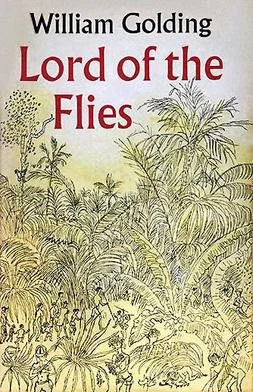
In the summer of 1967, I was preparing to enter my freshman year at Quigley North Preparatory Seminar. I was enrolled in Honors classes and our English Professor, Father John Flavin assigned us three books to read before we arrived for our first day of class. Sending us a clear message that we were entering a demanding academic program. The books were A Night To Remember, Silas Marner and Lord of the Flies. I enjoyed Walter Lord’s chronicle of the Titanic disaster, hated Silas Marner and loved William Golding’s classic. Actually, reading Lord of the Flies at 13 was a seminal moment in my intellectual development and its themes have stayed with me to this day. The book shaped my understanding of human nature, detailed how civilisation can collapse and alerted me to the fragility of the social order. Therefore, it deserves a place on my “All Time Best” list.
I was the same age as Ralph, Jack, Piggy and Simon, the major characters in the book, when I first read Lord of the Flies. This may explain the book’s immediate impact on my psyche. Golding placed adolescents, not hardened adults or young children at the center of his story. Young men on the cusp of manhood were placed in a unique situation, stranded on a remote island without any adult supervision. How they reacted to this situation is the vehicle chosen by Golding to demonstrate his central thesis- the veneer of civilisation is very thin and the potential for barbarism is woven into the fabric of human nature.
The novel opens with the promise of adventure. British schoolboys, evacuated during wartime, crash on a tropical island. They are on their own. At first, this seems almost idyllic, a boyhood fantasy of freedom and self governance. Ralph, wise beyond his years, is elected leader. He establishes rules, builds and maintains a signal fire, constructs living shelters and uses a conch shell to ensure orderly and democratic meetings. The early chapters pulse with optimism, cooperation and industrious energy- boys playing at civilisation and society. But Golding’s prose, vivid and unflinching, tracks the disintegration of the group with surgical precision. Jack’s choir, once uniformed symbols of British propriety, transform into painted hunters drunk on the violence of the kill. The measured debates give way to chants and rituals. Piggy’s glasses, instruments of fire and a symbol of intellect and enlightenment, are stolen and broken. The conch, symbol of democratic order and process, is smashed along with Piggy’s skull. Simon, the mystic and philosopher, who alone understands that the “beast” lives within the human soul, is murdered in a frenzy of collective hysteria. Powerful writing!!!
What struck me then and haunts me now, is Golding’s theme that the descent into savagery is not an aberration or an accident. They are ordinary boys from reputable families, products of one of the most civilised societies on earth. They are not delinquents or damaged children. Yet within weeks, without social structure or external authority, they become killers. The narrative shows that civility is not a deep rooted human attribute, but only a fragile construct that requires maintenance and enforcement. This was an eye opener for me at thirteen, a revelation that he world operated according to darker principles than I had previously understood. My kind grammar school nun teachers had focused more on the saintly potential in human nature. The island society in the book is incomplete as representation of society at large- there are no women- but this limitation doesn’t diminish Golding’s primary insights.
Unfortunately, my 60 years of observing humans in action since I read the book have only reinforced the validity of Golding’s thesis. The Rwandan genocide, ethnic cleansing in the Balkans, the horrors of Darfur, the forever wars in the Mideast- all confirm that the path from neighbour to murderer requires neither exotic circumstances or ancient hatreds. All you need is an atmosphere of fear and the collapse of institutions. International terrorists and autocrats follow the same rule of the mob dynamics Golding depicted on the island. There is a dehumanisation of the “other”, the intoxication of collective violence and a willingness to give up your free will when given the opportunity to belong to a group that normalises one’s darkest impulses. Even in stable democracies, we have witnessed how fragile the rule of law becomes when demagogues stoke fear and resentment. The painted faces and sharpened sticks of Lord of the Flies have been replaced by more lethal weaponry but the underlying dynamic remains unchanged.
The Lord of the Flies has shown amazing staying power since it was published in 1954. It is a fixture in high school and university curricula worldwide, over ten million copies have been sold and it has been translated into dozens of languages. The novel’s continuing presence in classrooms is significant. Golding’s warnings remain fresh and relevant to each new generation of students. The book sparks vigorous debates on human nature, social organisation and moral responsibility. Golding received the Nobel Prize for Literature in 1963, with the Academy citing his novels’ illumination of “the human condition in the world today.” Well deserved!
Reading Lord of the Flies as a teenager taught me the fundamental lesson that civilisation and a society based on the rule of law is an achievement, not a birthright. It requires dedication and work. This recognition has informed my understanding of politics, history, morality and human nature ever since. Golding offered no easy answers, only an unflinching diagnosis delivered in sharp prose. GREAT Book!