Spotlight on Books: WFM’S All Time Best: “To Kill a Mockingbird” by Harper Lee
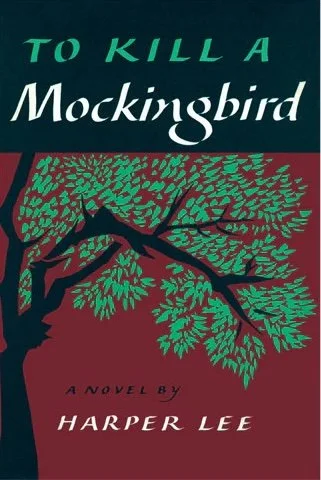
During my eighth grade year at St Juliana’s, Sister Dominic led an after school reading group focused on classics. Among the books we read, To Kill a Mockingbird made the deepest impression on me. Published in 1960 to immediate acclaim and winning the Pulitzer Prize or Fiction in 1961, the novel opened a window to a reality totally foreign to my Chicago childhood, the Depression era American South. It captivated me- the critical issues of race, racism, poverty, moral responsibility were presented in a compelling fashion. The storytelling was magic.
My understanding of the south in the mid 1960’s was very limited- fragmented images from television news and rudimentary knowledge of Civil War history. I knew the South was built on slavery, that the Confederacy separated from the Union and that Lincoln ultimately freed the slaves and that the North won the war. A century later, the same region dominated the news with images of Selma, Bull Connor’s firehoses, the Klan, Freedom Marches and the speeches and sermons of Martin Luther King. Lee’s novel is set in the mid 1930’s, in Maycomb, Alabama, a place that didn’t seem to change much from 1860 to 1960. Race was still the driving societal issue.
For me, what made To Kill A Mockingbird unforgettable was not its moral lessons- though these were powerful- but Lee’s ability to create a complex and multidimensional world through the eye of her narrator, Scout Finch, a pre-teenage girl. The prose was crisp, user friendly and readable. Her voice was authentic and engaging. You cannot help but identify with Scout. Her character, her brother Jem and their friend Dill all felt real to me and I identified with their childhood adventures and curiosity. Lee also populated Maycomb with a gallery of vivid southern personas: the mysterious and frightening Boo Radley, the morphine addicted Mrs Dubose and the white trash Ewell family. The characters embody humour, dignity, ignorance and racism. They are complex- often despicable, but Lee doesn’t write them as cardboard figure stereotypes. They are rather human. The rural small-town atmosphere also jumped off the pages. Lee brilliantly described the heavy and humid southern air, the dusty streets and the slow rhythms of daily life. We see the rigid social hierarchies and the peculiar coexistence of gentility and brutality- humour and hatred. It was a place where people sat on porches, where everyone knew everyone else’s business, where manners mattered intensely, but where fundamental justice failed completely.
Ultimately, the novel is about race, class, justice and moral responsibility. The heart of the novel is the trial of Tom Robinson, a black man falsely accused of raping a white woman. Atticus Finch (Scout’s father) is Tom’s court appointed lawyer and his defence is methodical, devastating, irrefutable- a certain acquittal in any fair tribunal. Instead, the all white jury convicted Tom despite the overwhelming evidence of his innocence. A gross miscarriage of justice. The racism was culturally embedded and no other verdict was possible. We see the community threatening and ostracises Atticus Finch for doing his duty as a lawyer. His family is attacked. It is not a pretty picture and essentially confirmed what I was observing about the Jim Crow South on the TV coverage of the cilvil rights marches. The book was not only poignant- it was timely.
Lee was also attentive to class divisions within white society. The Finches belonged to Maycomb’s faded aristocracy- educated, principled, but no longer wealthy. The Ewell’s occupied the bottom rung, their poverty and ignorance weaponised into a vicious and virulent racism. And, the blacks- they were invisible- the lowest of the low. The novel suggested the South was obsessed with both a class hierarchy and a racially based caste system. An unhealthy place! The book was not popular in the South and many school districts attempted to ban it from the school libraries.
Finally, the book is a tribute to Atticus Finch- a moral exemplar for Harper Lee. He is a quiet hero, teaching his children through example rather than lecture. His fearlessness in defending Tom Robinson, his insistence that Scout and Jim treat everyone with respect regardless of class or race, his teaching that courage means doing the right thing even when you knew you would lose- these lessons resonated powerfully. Lee built tension masterfully, from the courtroom drama, the attack on Scout and Jem, the sad demise of Tom Robinson. It was a gripping and relentless narrative with keen moral instruction and guidance embedded in every page. No wonder teachers everywhere include the book on their mandatory reading lists today.
At 13, I absorbed these lessons and accepted Atticus Finch as a role model- an unambiguous hero in a nasty world. Only much later did I recognise that I had missed the “white saviour” dimension of the story. The black characters, Calpurnia (the Finch family housekeeper), Tom Robinson and the the black community in the balcony at the trial remain peripheral. They are vehicles for conveying an important story, but never given the in depth treatment Lee grants to her white characters. We see the impact of racism, but not the full humanity of those who suffered it most. A novel telling this same story from Calpurnia’s or Tom’s perspective- something like Percival Everett’s recent James, which reimagined Huckleberry Finn from the slave Jim’s viewpoint- would be a fascinating and more complete work.
Harper Lee has an interesting personal history and legacy. She was born in Monroeville, Alabama in 1926 and drew heavily on her childhood experiences for the book. There is a lot of Harper Lee in Scout Finch. The character Dill is a actually based on her childhood friend Truman Capote. She maintained a lifelong connection with him and even assisted him as a researcher for In Cold Blood. After Mockingbird’s phenomenal success- winning the Pulitzer Prize and selling over 40 million copies, Lee largely retreated from public life. She did consult on the award winning film adaptation of the book and became a close friend of its star, Gregory Peck. A complicating controversy arose with the 2015 publication of Go Set A Watchman - a draft book she supposedly wrote before Mockingbird, but never published in her lifetime. There, we meet and older Atticus who is presented as a dedicated segregationist. The resulting hullabaloo hasn’t diminished Mockingbird’s enduring impact.
For me, To Kill a Mockingbird has stood the test of time. The novel contains lessons about courage, empathy and justice. Harper Lee delivered the lessons through compelling and fully realised characters. There was much to learn from the complex moral terrain of Depression era Alabama. Who knew??