Spotlight on Books (2026): LONDON FALLING by Patrick Redden Keefe
Patrick Radden Keefe is the rare journalist whose byline is reason enough for me to buy his books. A staff writer at the New Yorker since 2006, Keefe has built a body of work defined by dogged, almost obsessive research and an unapologetic prose style that never sacrifices clarity for cleverness. Say Nothing: A True Story of Murder and Memory in Northern Ireland is a masterpiece- a book that used a single unsolved murder to unlock thirty years of the “Troubles” in Northern Ireland. It won the National Book Critics Circle Award and was named by the New York Times Book Review as one of the twenty best books of the century. Empire of Pain, his investigation of the Sackler family and the origins of the opioid crisis was nearly as impressive. It was meticulous and damning and the narrative was written with pace and character. In between, he published Rogues, a collection of New Yorker essays that he expanded into a book. Keefe profiled quirky and unique stories involving crime, secrecy, money, fraud and celebrity with subjects ranging from El Chapo to Anthony Bourdain. It is lighter than his big books but he displayed the same gift for reading people. Keefe occupies a rare tier as a critically and commercially successful author that readers trust. I am a fan.
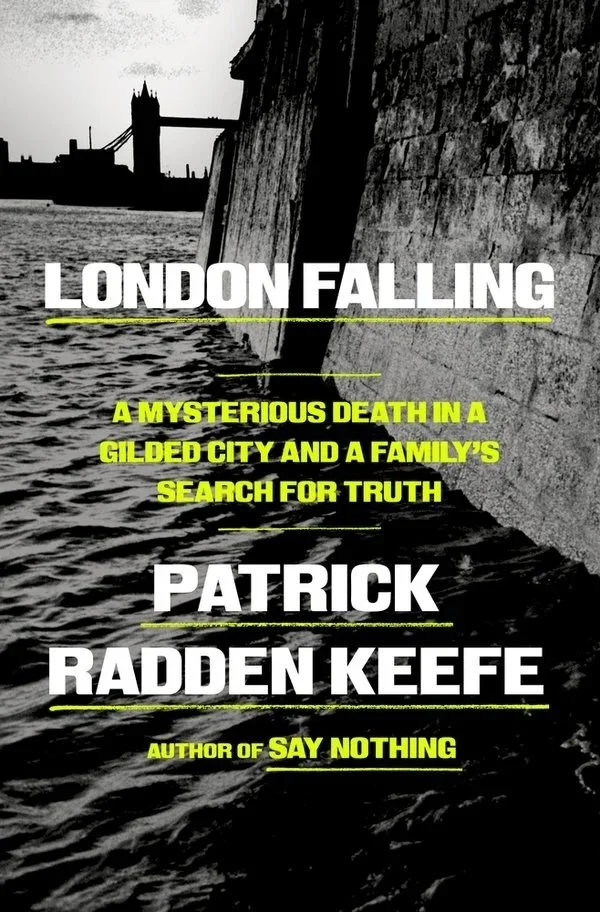
London Falling, his most recent book was a tougher read and is harder to review. It is strong and well written. However, it is also a very frustrating read because Keefe’s standard practice of exhausting research doesn’t produce a clear or definitive answer to the mystery he presents in the book. What am I talking about here? The book tells the story of Zac Brettler, a nineteen year old from a comfortable and successful Jewish family in London. Without explanation, he reinvents himself with an entirely different identity- as Zac Ismailov, the son of an incredibly wealthy Russian oligarch. He used the alternate identity to insinuate himself with a host of dodgy businessman, crooked fraudsters and violent money launderers. We meet an incredibly bizarre cast of characters, mostly emigres from Russia, Africa or India. The dramatic episode at the center of the book is Zac falling to his death from a fifth floor luxury condo on the Thames in November, 2019. Was it a suicide? Was he pushed or was he trying to escape from men he had deceived and now feared? Keefe, working with Zac’s parents, spends the book trying to find answers and his reporting, as always is extraordinary. He researches financial records, surveillance footage, GPS data, Zac’s social media accounts and conducts dozens of interviews with people who interacted with Zac during the relevant timeframe. Impressive!
Unfortunately, the investigation and research cannot deliver what a reader of a Keefe book has learned to expect- A RESOLUTION! There is no definitive answer on how or why Zac died. There is no reckoning for Akbar Shamji, the charming and wealthy fraudster who accepted Zac into his world and introduced him to his schemes. There is no meaningful judgement rendered on Verinder Sharma, the gangster who was living in the condo and was present when Zac jumped to his death. The underground ecosystem that consumed Zac the months before he died is still flourishing in London. The private clubs and back channels that provide societal cover for crooks and criminals are still active and prosperous. I finished the book admiring Keefe’s craft and dedication, but feeling cheated because I was deprived of an ending. The reader is denied a final chapter, not by Keefe’s choice but by the unsettling realisation that the “reality” of modern London refused to cooperate. The mystery is unsolved and London and its elites are complicit.
The book is most depressing when Keefe examines the official investigation into Zac’s death. It is an autopsy revealing gross incompetence. Keefe’s portrait of Scotland Yard, long mythologized as the world’s premier police force is devastating. They are underfunded, understaffed and guilty of what Keefe describes as a “maddening incuriosity.” Keefe makes a broader indictment of the London financial and political power structure in the process. London is outrageously corrupt. Since the fall of the Soviet Union it has become the home of looted and stolen oligarchs fortunes. The banks enthusiastically accept deposits of dirty money. An entire ecosystem of bankers, lawyers, estate agents and politicians grow rich by servicing dark Russian, Gulf States, Indian and African emigre money. The government, going back to Thatcher made policy choices which welcomed and encouraged shady foreigners to make London their home and business base. There were “non dom” tax rules, investor residential and work visas- all which made London’s most elite and old world institutions complicit in their own corrosion. I love London- the theatre, the museums, premier league soccer, the history and the international cuisine- but confess I will never walk the streets with the same innocence again. There is a low hum of ugliness now audible beneath the surface and I don’t think I will be unable to unhear it on future visits.
My other problem with the book is I have not been able to muster a ton of sympathy for Zac. He is the ostensible center of this entire story and I find him to be bizarre. I think Keefe developed more empathy and understanding, particularly after becoming friends of the parents. His invented persona, a teenager convincing grown adults that he was in charge of brokering international deals on behalf of his billionaire father is absurd rather than tragic. It is at a comic book level in its implausibility and the mystery of how anyone believed him nags at me more than the mystery of his death. His parents come across as decent if somewhat detached and Keefe’s exhaustive detailing of Zac’s grandparents’ history is textured without being illuminating. It doesn’t move the plot and doesn’t enlighten us on why Zac went off on the tangent he did. The parallel material on the fraudsters, criminals and oligarchs is genuinely fascinating and does connect thematically to the book’s money and migration nexus. Keefe could generate a series of New Yorker articles on all these players.
Ultimately, London Falling asks the right questions about what a single strange death reveals about a great city that may have lost its soul and mojo. Keefe writes as beautifully as ever. He is comprehensive and I don’t think he missed anything in his research. But it is an unusually inconclusive book and I closed it more unsettled than satisfied. I still recommend it though.