Spotlight on Books (2026): AMERICANAH by Chimamanda Ngozi Adichie
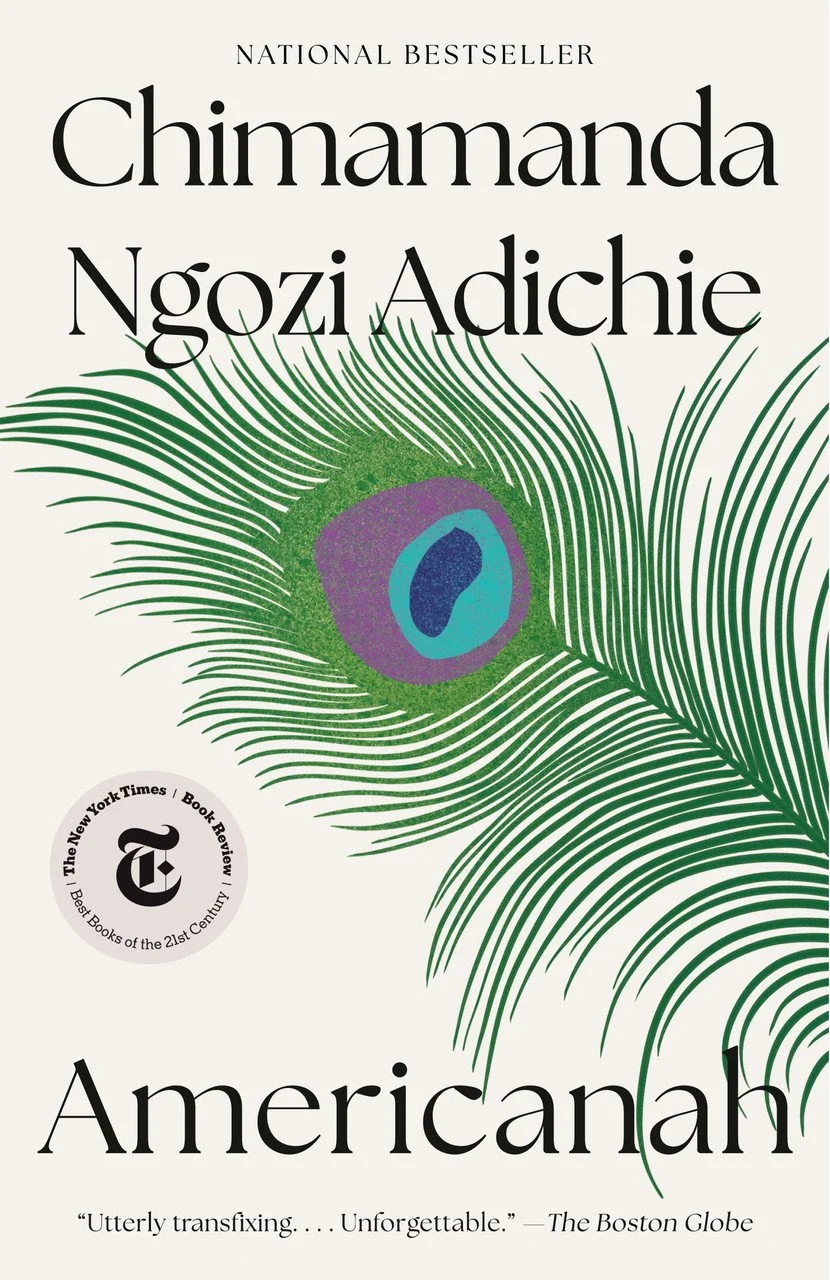
There are novels that entertain, novels that inform and then there are rare works that fundamentally alter how you perceive the world. Chimamanda Ngozi Adichie’s Americanah belongs in this last category. It was a revelation for me. It is clear eyed in its observations, fearless in its exploration of human relationships and a meditation on the human condition. You will reconsider and rethink many long held assumptions after completing this book. It is ultra surprising because I cannot think of an author I have less in common with personally. Who is this 21st century writing superstar and TED TALKS sensation?
Adichie was born in 1977 in Enugu, Nigeria. Her parents were educated and upper middle class. She left for the United States at the age of 19, experiencing the transformation from being “Nigerian” to becoming “Black” in America. She received a first class university education and embarked on a remarkable literary career. Purple Hibiscus (2003), Half of a Yellow Sun (2006), and Americanah (2013) have garnered major international awards including the Orange Prize, the National Book Critics Circle Award and a MacArthur Fellowship. I enjoyed her first two works but Americanah confirmed a new level of maturity in her writing. It is one of the finest novels of the 21st century. What makes the work so extraordinary is Adichie’s ability to observe the nuances in all types of human relationships. She exposes the full range of the human mosaic- the intricate, overlapping and contradictory elements of the human experience. Her range is magical. She creatively builds narratives that involve different cultures, races, genders and generations. If you ever doubted that “diversity” is a major element in the modern world, Adichie will bring you back to reality.
She is brilliant on “Women Among Women” interaction. She portrays female relationships with remarkable depth, refusing easy sentimentality. Ifemelu and Ginika are two of the primary characters and their friendship survives geographical separation but strains under unspoken competition and changing values. Intergenerational relationships- specifically Ifmelu with her mother and aunts, are a blend of mentorship, judgement, obligation and affection. Aunt Uju is a cautionary tale and a source of wisdom. Women support one another but also judge, compete and wound one another. Female relationships require constant nurturing and sometimes outright renegotiation.
Adichie is equally perceptive on “Women on Men.” Her lead female characters observe men with love, affection, exasperation and analytical precision. American masculinity is built on a different structure than Nigerian masculinity but both confront equally rigid expectations. Performance, success and strength are core components of the formula in each society. Her characters observe how even progressive and enlightened American men retain unexamined and unchallenged assumptions about male control. American men are adept at showing vulnerability without relinquishing power. It rang true!
Adichie is fearless in exploring racial perspectives across continents. Are Nigerian Blacks and American blacks different and if so, how and why? It may be her most valuable examination of relationships and potentially the most uncomfortable. African immigrants to the United States arrive without the generational trauma of slavery and Jim Crow, creating painful and awkward disconnects with their Black American cousins. They often default to the “model minority” narrative, broadcasting their educational achievements and financial bonafides. American born Blacks see Nigerian emigres as naive and clueless about the nature of American racism. They also describe them and a opportunists who benefit from an American psyche that is more comfortable with “foreign born” blacks. Adichie handles these potentially explosive racial tensions through a thoughtful structural device - her main character Ifemelu starts a blog and posts her observations and insights on a regular basis. The blog format allows Ifemelu to address contentious racial and cultural issues in a more relaxed and conversational way. It works brilliantly. The blog feels authentic and organic.
My favourite blog post addresses Barack Obama as “America’s Magic Negro”, a term from critical race theory describing a black character who exists primarily to help white protagonists feel good about themselves. Ifemelu applies this to Obama’s initial appeal as a black man who seemed to transcend race and who made white Americans feel enlightened without making them feel uncomfortable. White Americans could vote for the cool and detached Obama as proof of their post racial enlightenment without confronting ongoing structural racism. Ifemelu observes that white people’s anxiety about being called racist often exceeds their concern about actual racism and that conversations about race in liberal spaces follow predictable and non threatening scripts.
Adichie also does not shy away from the internal dynamics in Nigerian and American culture. “Nigerians on Nigerians” is a recurrent theme. There are complex internal hierarchies of class, ethnicity, religion and language. Lagos, the Nigerian capital, becomes a vivid character. It is vibrant, exhausting, corrupt, creative and infuriating. When Ifemelu returns home after years in America, she must relearn Nigerian societal “codes.” Nigerians who have “Been To America” are a minority that occupy an ambiguous position in society. They are admired for their international experience and sophistication, but resented for presumed superiority and suspected of permanent “Western” contamination. “Nigerians on Americans” reveals a similar double consciousness. American efficiency and productivity is admired but social interactions are superficial. Americans are friendly but not particularly curious about other cultures. Nigerian characters note how Americans talk endlessly of freedom, but are actually rather rigid and conventional in their lifestyles. Americans are gregarious but avoid intimacy. These tensions experienced by Nigerians who lived the American dream are a regular feature in the novel. Parents who invested everything in their children’s education abroad struggle when those children don’t want to return, or return so changed as to be unrecognisable. Neither generation fully understands each other and maintaining mutual love and respect requires hard work.
All of these perspectives are crystallised by Adichie’s extraordinary writing. Americanah jumps from important to brilliant because her prose is precise, clean and almost aerodynamic. Her sentences are models of efficiency and not a word is wasted. Her prose is crisp and uncluttered and achieves the difficult balance of being both accessible and sophisticated. She also possesses an amazing wit. You will laugh frequently when reading this very serious book. Surface humour comes from clever observations and well timed dialogue. Deeper humor emerges when she reveals the gaps between what people say and what they truly believe. Her depiction of a white liberal’s discomfort when discussing race is often hilarious because it is so recognisable. She also balances satire, cynicism and tenderness. The book is littered with characters engaging in pretension and self deception, but she doesn’t condemn them for their hypocrisy. Her characters are flawed and foolish but they remain approachable, even sympathetic. She has a great ear for how people actually speak and the dialogue always advances the plot by revealing character, exposing cultural assumptions or dramatising power dynamics. Her greatest writing achievement is making the invisible visible. She subtly portrays hierarchies and unspoken rules which govern social interactions across cultural and racial boundaries. Reading Americanah produces constant moments of recognition where you say to yourself: “ YES, THAT IS EXACTLY RIGHT!”
Americanah is a great novel because it captures the full complexity of the human experience without simplification or sentiment. It is artistically accomplished, intellectually rigorous and emotionally compelling. Although focused on Nigerian and American society, the themes have a universal resonance. Reading the novel forces the reader to embrace a deeper engagement with the world that is buzzing around them Page by page, it makes you think longer and harder about reality and that is a very good thing. Adichie is a gifted story teller. Kudos to her.