Mark Twain: His Literary Legacy
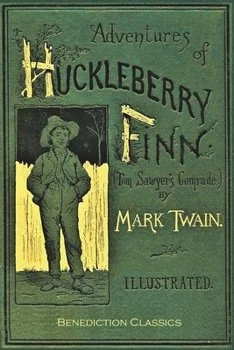
Ron Chernow’s biography confirms that Mark Twain continues to hold a special place in the pantheon of great American writers. First, we see his remarkable range. Twain’s published works span humour, travel writing, novels, essays, autobiography and social criticism. He occupies a singular position in American letters because he literally invented the sound of American prose. After Huckleberry Finn American writers realised their writing could mirror the way Americans actually spoke. Twain changed the game by using vernacular, being direct, skeptical and funny without being pompous. Novels could also express profound moral truths. Ernest Hemingway claimed that all modern American literature descended from Twain. Twain just didn’t write great books- he changed what American writing could be and what it could say. Luckily, I have read the majority of his major works and embrace this opportunity to remind our audience of his lasting impact.
The Innocents Abroad established this reputation, puncturing European pretensions while celebrating earthy democratic irreverence. The book was hugely popular, made him famous and taught American readers that American writers had no need to genuflect to Old World culture. Roughing It captured frontier life with humour and affection while remaining clear eyed about violence, greed and hardship. It is brilliant- essential for understanding how the frontier west became an enduring part of American mythology. The Gilded Age is great satire about Washington corruption and captured an era where incredible prosperity coexisted with moral depravity. It defined an era and the title has a permanent place in the American lexicon.
His next three works are his finest and define his contemporary reputation for writing excellence. The Adventures of Tom Sawyer brought his boyhood in Hannibal, Missouri to life. It is nostalgic, sweet and celebrates childhood adventure. It is also raw and acknowledges the risk of violence in small town culture. It created the archetype of American boyhood and has never been out of print. Life on the Mississippi combines memoir with cultural history, chronicles his years as a riverboat pilot and then returning to visit the river decades later. The opening chapters on learning how to pilot are beautifully written- detailed, specific, infused with love for the craft and awe at the power of the river itself. The Adventures of Huckleberry Finn is his masterpiece. Huck’s voice, honest and morally clear, revolutionised American prose. The novel wrestles with slavery, race, conscience and freedom in transcendental fashion. The novel is a profound moral fable about recognising another’s humanity across the colour line and Huck’s choice of friendship and humanity over law and convention is powerful. The current controversy in academia over Twain’s constant use of the “N” word in describing Jim and black slaves is “woke” nonsense. Twain wrote in the vernacular used by the people who lived in that era. Applying modern standards of political correctness to protect sensitive modern readers is intellectually dishonest and morally empty.
A Connecticut Yankee in King Arthur’s Court is creative in the extreme. Twain uses time travel to examine whether democratic modernity and technological progress are moral advancements over feudal practices. The ending, where the Yankee’s improvements in weaponry culminate in mass slaughter reveal a darkness in Twain’s worldview. The Prince and the Pauper showed Twain could write conventional historical fiction and demonstrated his interest in how accidents of birth can determine life outcomes. Pudd’nhead Wilson takes risks on race and identity issues. The melodramatic plot- babies switched in cradles, one white and one mixed race allows Twain to explore race as a social construct rather than a biological destiny. These were radical ideas at the time. Finally, Personal Recollections of Joan of Arc deserves mention because Twain considered it his best work. I, and most critics, disagree- I couldn’t get through it. He attempts to show how resistance to authority and standing up to the crowd are the true test of moral courage. Very ambitious, reverential toward Joan, but boring to the reader. No one is perfect!
Twain has also stood the test of time because of his ability to craft aphorisms that perfectly capture permanent truths about the American character and human nature. They work because they are funny, true and entertaining- while offering pearls of wisdom. I am happy to share some of my favourites.
On human nature, “If you pick up a starving dog and make him prosperous, he will not bite you. This is the principal difference between a dog and a man.”
On conformity, “Whenever you find yourself on the side of the majority, it is time to pause and reflect.”
On courage, “It is curious that physical courage should be so common and moral courage so rare.”
On schooling, “I have never let my schooling interfere with my education.”
On democracy, “It is by the goodness of of God that in our country we have precious things, freedom of speech and freedom of conscience and the prudence never to practice either of them.”
On certainty,”It ain’t what you don’t know that gets you into trouble, it is what you know for sure that just ain’t so.”
On classics, ”Classics, a book that people praise and don’t read.”
I could go on forever. Only Shakespeare is quoted more! Twain’s aphorisms endure because they capture American skepticism about authority and they challenge conventional wisdom. Most Americans encounter Twain throughout these witticisms, not by reading Huckleberry Finn. He survives in speeches, articles and conversation and he is an integral part of the American idiom.
Twain’s place at the summit of American literature rests on achievements that no other writer can match. He created a new writing style- using a vernacular voice to express complex ideas. His subject matter was, in terms of the issues he chose to address, always morally serious. He addressed America’s defining contradictions with an honesty that remains necessary and uncomfortable. He wrote about race when most white writers preferred silence. He attacked imperialism when jingoism was popular. He questioned democracy’s myths while celebrating its possibilities. His broad range of life experiences, including travel, gave his writing an unmatched authenticity. It is amazing that a boy from Hannibal who never finished school created art that contained eternal and universal insights. His voice in unmistakably American and he remains indispensable to understanding the nuances, challenges and contradictions of the American experiment.