The National Football League: A Mirror on America
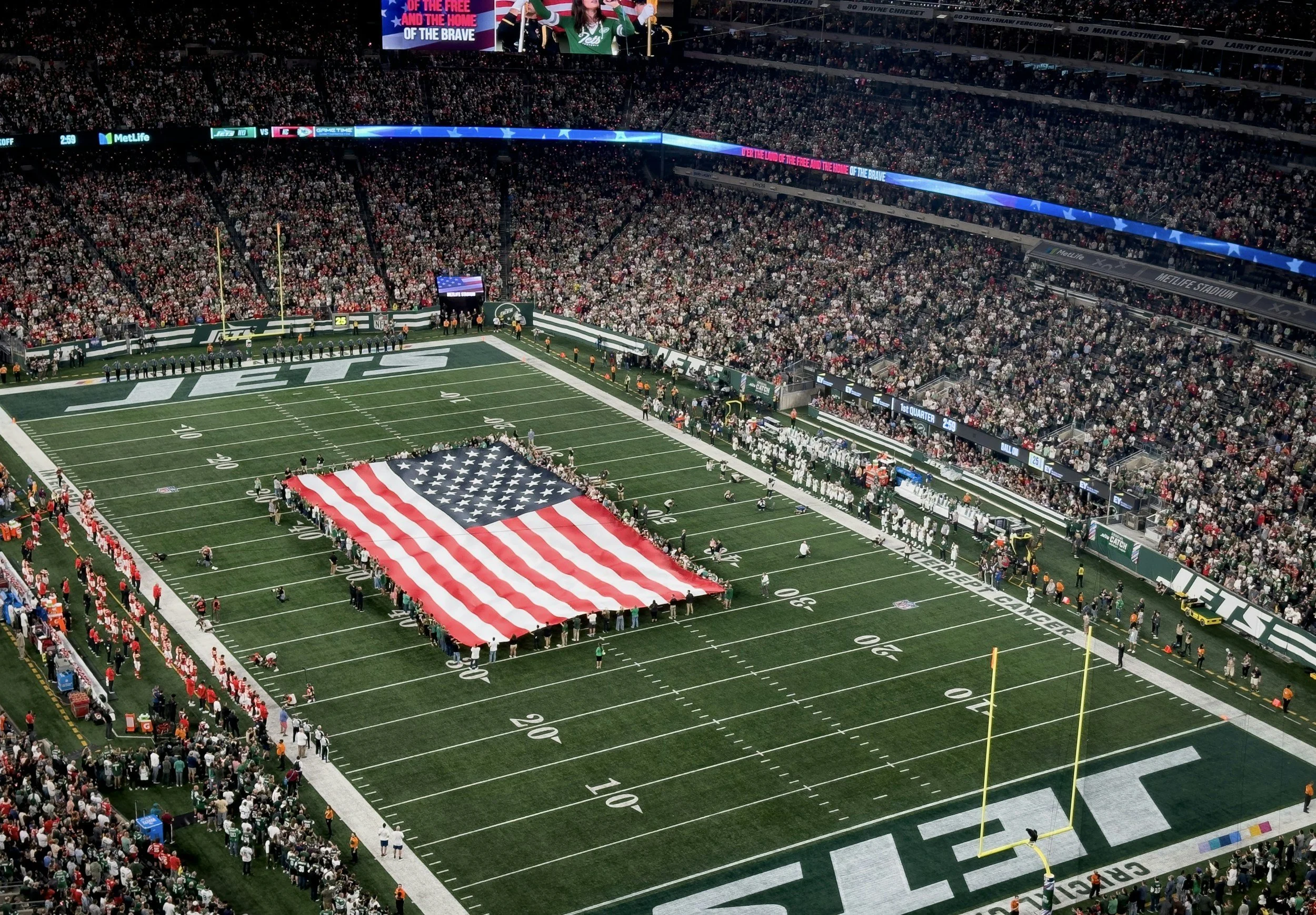
The 2026 Super Bowl convenes in California next week. The surviving squads are the Seattle Seahawks and the New England Patriots. May the best team win- another wildly successful season in the books. The timing is good for an examination of the role of professional football in American life. In a polarised society, it is one of the few phenomena that has almost universal appeal. I am a diehard fan. I have spent almost every Sunday since 1961 glued to the television screen. That is 65 years of autumn afternoons and winter evenings, thousands of games watched, ten thousands of plays analysed, my lifetime measured not in calendar years but in NFL seasons. I have won my fantasy football league three of the last four years- a point of pride that establishes my genuine credentials in penning this essay. I know the game and have my own pantheon of immortal players and coaches- those famous names have already been shared with you in prior postings. I am loyal to the Chicago Bears despite, to put it kindly, their rather uneven and disappointing results over the last six decades. What explains the incredible popularity and impact of this violent sport?
The NFL surpassed baseball as America’s most popular sport in the early 70’s and its dominance has only grown since then. In a nation where every topic and issue is weaponised, football is the unchallenged common ground- the only healthy and safe topic of conversation that bridges all demographics, all ideologies and all regions. This two part series will seek to unlock the magic and to understand how this game continues to capture the national imagination. Essay No 1 examines the NFL as a brilliant business machine- the economics, the structure, the socialist miracle within capitalism, the perfect marriage with television and the marketing geniuses that turned a sport into a secular religion. Essay 2 investigates what football reveals about American values, character and culture, the meritocracy, the violence, the communal joy and why the game endures as our national mirror.
This is Essay No 1-the NFL in prose. The numbers don’t lie- they roar! The NFL isn’t just popular- it is orders of magnitude more dominant than any competitor. Over 127 million people watched the most recent Super Bowl. By comparison, the NBA finals draw 10 million viewers. Weekly NFL viewership is 18 million and the Conference Championships draw 50 million people. Of the top 100 television broadcasts in 2025, 82 were NFL games. The league isn’t competing with other sports- It operates in a different universe. The economics are staggering. By 2025, the average NFL franchise has a value of $7.1 billion. The Dallas Cowboys alone are worth $13.1 billion. The current league revenue is 25 billion with projections to 30 billion by 2028. Compare those figures with 8 billion in 2008 and you see a growth curve that is relentless and seemingly unstoppable. The NFL is the most successful monetised sports product in the world and the No 1 media attraction in American entertainment. These franchises just are not normal businesses- they are monuments to an American obsession.
Where does all this money come from? Television rights still dominate- accounting for 60% of total revenue. The current contracts with CBS, NBC, FOX, ESPN and Amazon run through 2033 and will pay out 110 billion dollars over eleven years. Ten billion dollars per season flowing into league coffers before a single ticket is sold, before one jersey leaves a merchandise store rack and before one fan buys an 18 dollar beer. These long term contracts provide a revenue predictability that allows the league to plan strategically, invest confidently and weather economic uncertainty or downturns. The multilayered media landscape- network television, cable, streaming platforms and international broadcasts gives the NFL incredible negotiating leverage with potential partners. Everyone wants NFL content and the league can play the networks off against one another, demand premium terms and still find eager buyers. An awesome model!!
Next, we have the socialist miracle inside the capitalist money creation machine. This enormous television generated money largesse is divided equally among the 32 teams. The owners in New York, Chicago and Dallas get the same share as Green Bay and Jacksonville. It is the most successful revenue sharing model in American sports and is based on principles that would make Marx smile and Ayn Rand weep.
Local revenue is a different story and that source is growing as a piece of the overall pie. 30% of total NFL revenue now comes from local sources; ticket sales, luxury boxes, stadium naming rights, regional sponsorships and local media deals. The individual franchise keeps the local revenue which explains why the Cowboys are worth twice as much as the Bengals. Jerry Jones built a palace in Arlington with 300 luxury boxes and a massive videoboard, generating hundreds of millions in unshared revenue. The Bengals play in Cincinnati, have a smaller stadium, fewer boxes and limited corporate sponsorship opportunities. The NFL is a mixed system. The big differences in local revenue generate franchise value inequality that cuts against a pure socialist model, but the league tolerates it because the shared TV money remains so massive that competitive balance persists. The other key is the league’s salary cap system that establishes spending equality among the teams. The salary cap, negotiated thru collective bargaining with the player’s union is currently set at at 48.5% of total league revenue. The total salary pool is then divided equally among all teams. In 2025, each team had $255 million to spend on player salaries. Jerry Jones and the Cowboys can out earn the Packers and the Bengals, but he can’t outspend them on player acquisitions. The Yankees and Dodgers can buy baseball championships but that is impossible in the NFL. Every team faces the same mathematics and the same tradeoffs. How do you most efficiently deploy available dollars between your elite stars and the balance of the roster? Do you do long term or short term deals? Do you invest the majority of your resources in offence or defense? The strict salary cap transforms roster construction into strategic chess, where wisdom, talent and player evaluation skills matter more than wealth. The system guarantees roster turnover annually as each team make difficult budget and personnel decisions. Finally, the cap system also includes a gross salary floor for each franchise. Teams must spend 90% of the salary cap pool allocated to them. This prevents cheap owners from pocketing revenue while fielding terrible teams. The league forces competitive investment and you might as well spend the money trying to win games.
The other rule insuring competitive balance and parity is the draft system. The draft inverts hierarchy and the worst teams pick first and the best team picks last. Again, a redistributive scheme. The schedule rotates annually on a strength of opposition model. Division champions one year have the toughest schedules the following year and underperforming squads have the easiest. You combine all these features and you guarantee a rough competitive balance with each franchise opening a new season with an adjusted roster and fresh hopes for excellence and success. Basically I see it as a group of mendacious robber barons operating a worker’s collective. It works because these ruthless moguls have wisely concluded that regulated competition is superior to unregulated completion in a professional sports environment. The owners trust that the success of the league as a whole will enhance individual team value long term. The draft and fee agency rules create a machinery of hope for each franchise. The constant infusion of new players thru the draft and free agency keeps every fanbase engaged and the system promises that next year can be different - and better! The payoff structure is also genius. It is single elimination and a 6 seed can catch fire and win it all and a top seed can stumble and be sent home. The drama is guaranteed and anything can happen. Unpredictability is great for ratings which are great for everyone’s bottom line.
This humming and smooth machine was the products of great leadership and political savvy. It was not inevitable. Commissioner Pete Rozelle built the foundation and structure for this empire in the 60’s, but he needed government cooperation. Professional football under his model faced a legal problem. The revenue sharing and collective bargaining television contracts probably violated federal antitrust laws. Rozelle cultivated relationships with Presidents Kennedy and Johnson, argued that football served the public interest, that completive balance benefited the fans and that sports growth would generate jobs and tax revenues nationwide. He positioned the NFL, not as business monopoly but as a cultural institution deserving special treatment. Basically an entertainment utility! He persuaded the politicians in DC to allow the NFL-AFL merger on the same basis. Congress granted the NFL broad antitrust exemptions that became the foundation for everything that followed. You can’t beat legislative protection for your entire business model.
The benefits of the alliance with TV also went beyond the money at stake. The league became pervasive and expanded its reached beyond Sundays. Monday Night Football and Thursday Night Football became cultural institutions, wildly successful programming in prime time. Sunday was easy- everyone home- no competition- a made to order audience. Convincing Americans to watch football on weekday evenings was a marketing triumph. Part of the reason for the success is that the production values on these broadcasts are incredibly high. They are national social events with high profile announcers and camera technology that put viewers inside the game. The broadcasts are works of art with slow motion replays from eight angles, sideline reporters with immediate injury updates, graphics showing real time statistics and now betting lines integrated seamlessly for the 50 million Americans who wagered on NFL games in 2025. TV has become an NFL marketing machine. The draft has become a three day television event. Hard Knocks turned training camp into reality TV. The NFL combine is covered as if it were the Olympics. The NFL has become a 12 month a year production.
The Super Bowl is the NFL’s marketing masterpiece, a single game transformed into a week long cultural event that generates $600 million in revenue and captures 127 million viewers. It is an economic and cultural miracle and the most watched television production in American history. Companies spend $7 million for 30 seconds of commercial time and Super Bowl commercials enter the national consciousness and become part of a shared cultural memory. The halftime show has evolved from marching bands to spectacle- Rihanna, McCartney, Shakira, Beyonce, Drake, Springsteen. A big show! The host city reaps hundreds of millions in economic benefits. The NFL has turned one game into a national festival and it is certainly a celebration of American excess. People who never watch football watch the Super Bowl because they want to participate in a national moment.
The NFL is also going international- carefully and strategically. The NBA is more popular abroad but the NFL is making inroads. The NFL had 7 games in 2025- played in London, Munich Frankfort, Mexico City, San Paolo and Dublin. The league probably wont establish permanent international franchises because the logistical challenges are prohibitive and the time zones are unforgiving. But international exposure is not about franchises- it’s about television and streaming audiences which grow the media pie. It is also about merchandising dollars and euros. The international revenue was $1.5 billion in 2025 with strong future growth projections. It is part of the long term strategic plan.
A final piece of the economic puzzle is the very recent NFL decision to allow private equity firms to buy ownership stakes in NFL franchises. With franchise valuations in the billions, we are running out of individuals and families who have the funds to purchase these assets. Now, the NFL is permitting 4 approved private equity firms for purchases for up to a 10% ownership stake in teams. A necessary adaptation from the billionaire sole control model. It is another calculated move to keep the franchises liquid and the monies flowing but again it is a hybrid capitalist-socialist initiative. Private equity can only be a minority shareholder and they must be passive investors with no operational control. Most tellingly, if they sell their stake in the future, 20% of their profits are distributed equally among all 32 teams. It’s socialism through the backdoor- even the capitalist profits get socialised. The NFL needs private equity capital, but they refused to surrender the revenue sharing principles that created competitive parity. Pretty ingenious!
Finally, we must acknowledge the perfect marriage between live games, fantasy football and the new world of legal gambling. Fantasy football has transformed passive viewers into active stakeholders. Forty million Americans played fantasy football in 2025. 40 million fans who follow all the teams- not just their hometown favourite. They analyze matchups and check injury reports. The NFL dominates the national attention spans in an ADHD country. Now, gambling laws have changed and previously banned behaviour has become normalised, celebrated and a very big business NFL style. 46 million people placed a wager on an NFL contest in 2025. The league had prepared well for the legalisation and partnered quickly with Draft Kings, Fan Duel and MGM. The broadcasts now include betting lines and analysts dissect the point spreads. The transformation from back room whispering about illegal wagers to main stage promotion of legal gambling is breathtaking, almost shocking. Of course, it will be wildly profitable for the NFL.
Ultimately, the NFL is a machine that prints money. It is near perfect in its execution of its peculiar model. It identified what Americans want- excellence, drama, uncertainty, conflict, heroism, a joyful communal experience- and then built polished and professional systems that deliver the goods. It is a juggernaut that should be a required course in business school curriculums. It is a cartel that enriches all members, maintains competitive balance between the members and provides an institutional structure ruthlessly focused on protecting and improving the product. It is brilliant, ruthless and works spectacularly.