Spotlight on Books: WFM’S All Time Best: “The Visit” by Friedrich Durenmatt
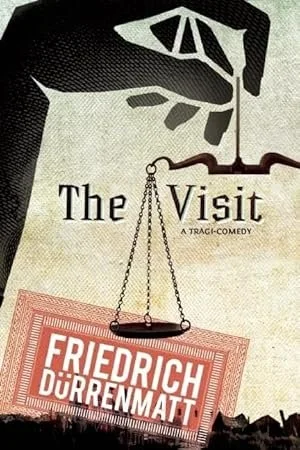
I first encountered The Visit at the Aspen Institute Executive Seminar. I am cheating a bit here- this is not a novel or book, but rather a play. It is an unsettling “tragic comedy” with elements of the “theatre of the absurd.” It fuses dark humour with existential horror. The author is Friedrich Durrenmatt, a Swiss playwright and it was published in 1956- ten years after the end of World War II. The work is masterfully written and presents a chilling and disturbing portrait of the modern world. It is ultra provocative because it challenges our faith in humanity. It is probably not for everyone, but I recommend it enthusiastically. Be bold!!!
The narrative is straightforward. The impoverished town of Gullen awaits salvation. Claire, the world’s wealthiest woman is coming home. The villagers dream of her generosity and prepare a grand welcome. Alfred III, owner of the general store and Gullen’s most popular citizen, prepares to charm his former lover into opening her checkbook. Claire arrives early by pulling the emergency break on her express train- immediately displaying the raw power associated with her wealth. She is grand and grotesque, dripping with jewelry, traveling with a coffin, three husbands, a butler and two lisping and blind eunuchs. Her body is a patchwork of prosthetics. She is simultaneously human and machine. At the town celebration, Claire makes her offer- she will donate one billion marks, half for the town and half to be divided among the townspeople and their families. Wonderful- what could go wrong? Alas, there is a catch- a condition to be met before the money is delivered.
Claire’s condition is the money will be distributed only after the town eliminates Alfred III. The terms are communicated by the butler- a man who previously served as Lord Chief Justice in Gullen. He had presided over a paternity trial 45 years earlier- a suit filed by Claire against Alfred. He ruled in Alfred’s favor after hearing Alfred’s lying denial of the charge and the testimony of two male witnesses who claimed to have slept with Claire. She had left the town in disgrace, was forced into prostitution, but later became wealthy through strategic marriages to rich old men. She eventually humbled the proud judge and made him her butler servant. The eunuchs are the two witnesses who lied at the trial. She has been systematically doing justice to those who engineered her youthful disgrace and now it is time for Alfred to pay the piper. Expressing shock, the town Mayor indignantly rejects Claire’s proposal. He says “we would rather remain poor than have blood on our hands.” The townspeople, gathered in the square, loudly proclaim their support for the Mayor. They are, after all, good people with strong Christian moral convictions. Claire pauses, stares them down and replies- “I’ll wait.”
What follows is Durrenmatt’s devastating portrait of moral collapse and corruption- one that is incremental and then inexorable. The villagers begin to buy expensive items on credit. There is widespread institutional cowardice. The Mayor who had thundered on about European humanism, begins speaking of “justice” and the importance of a hopeful and prosperous future for town and its children. The Pastor speaks of Christian charity, but refuses Alfred sanctuary in the church. His faith, when tested against material temptation, proves hollow. The police offer no protection to Alfred. The village teacher gets drunk, threatens to tell the truth to the press, but then decides to go silent when intimidated by his fellow citizens. Ultimately, the Mayor orchestrates a democratic vote on the issue- not “should we kill Alfred” but “should we accept Claire’s generous donation to the town?” The town votes unanimously in favour. Alfred refuses to commit suicide. He is then cornered in the town square by the entire community and disappears from view. The Mayor announces Alfred’s death and blames it on a heart attack caused by the “joy” Alfred experienced at Claire’s donation. The newspaper accepts the story without skepticism. Alfred’s wife walks away with her son and buys herself a fur coat.. After the deed is done, Claire deposits the check and leaves with Alfred’s body in the coffin. OUCH!
The moral issues flood the zone here. Money corrupts- money exposes humanity’s true character. Everything can be bought! The town’s European humanism, their Christian values- all revealed as conditional, only operative when economically convenient. Durrenmatt’s genius is showing ordinary people who genuinely believe in their own goodness, being complicit in terrible acts. They are not monsters- they aren’t criminals. He also unsubtly argues that civilising Institutions and democracy can provide cover for bad behaviour when incentivised by greed and avarice. It is a savage critique of Western hypocrisy. Societies that proclaim the sanctity of human life are morally defective because they have decided to organise themselves around a system where everything has a price.
Furthermore, Durrenmatt exposes that money corrupts all parties. Claire’s wealth has not brought her happiness. She should be a sympathetic character because she was wronged when she was young. Instead, she has become as bad as her accusers and then her victims. She is imprisoned by her billions just as much as Gullen is compromised by them. Wealth can destroy the soul of the giver just as thoroughly as it corrupts the recipients. We also see how collective action hides individual responsibility. No one person can be identified as Alfred’s killer. Each person can claim they didn’t personally commit a murder. They can collectively proclaiming their goodness in insuring future prosperity for the community. Durrenmatt was Swiss and the play is a not so subtle indictment of Switzerland’s behaviour in WWII. Swiss neutrality was actually complicity with the Nazis. Switzerland deported Jewish refugee, imprisoned Allied soldiers, accepted looted Nazi gold and conducted regular business with the Third Reich. Switzerland’s prosperity was built on a mountain immoral choices and policies. The Gullen Mayor’s proclamation when conformed with Claire’s terms — “No- we are still in Europe, we are not savages” drips with irony since 6 million people had just been murdered in the Holocaust. Durrenmatt was asking his comfortable Swiss audience, and all of us, how different are you from the Gullen villagers? The play is haunting. It forces us to confront uncomfortable questions. The Visit holds up a mirror on humanity and the reflection is not particularly flattering. Not a light read, but an important one.