The Iran Reckoning (Part 3) - The Military Scorecard
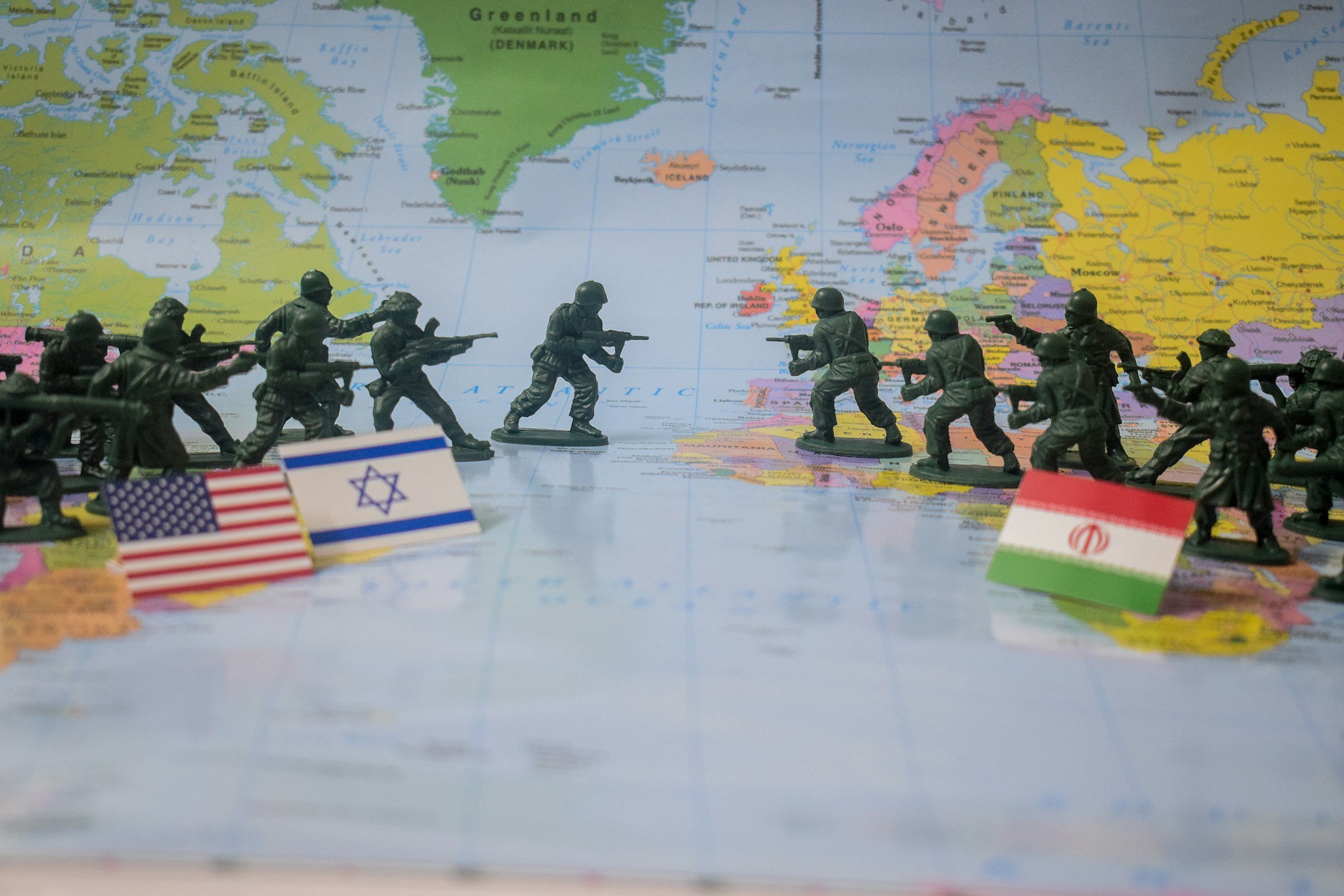
The opening phase of Operation Epic fury was, by any measuring stick, extraordinarily successful. Within three days, Iran had no functional air force, no operational navy, no air defences and no radar capable of tracking incoming aircraft. Israeli jets were flying over Tehran dropping precision guided bombs around the clock. The United States was striking thousands of targets in the western half of the country. The military dominance was total and unprecedented. Trump was not wrong when he said Iran had been comprehensively demolished. The problem is that classic military control of the skies does not guarantee long term strategic and political success. The jury is out on that question.
The catalog of destruction is genuine and significant. Iran’s entire Navy is at the bottom of the sea. Its air defence systems are non existent. More than half of its ballistic missile launchers have been taken out. Its missile production facilities and drone manufacturing plants have been targeted repeatedly and effectively. The IRGC headquarters and the intelligence, command and control structures have been destroyed. The remaining components of the nuclear program have been struck with powerful conventional munitions. The senior leadership has been systematically decapitated. Israel is attacking Hezbollah in Lebanon and the encirclement strategy employed by Iran for 4 decades is in tatters. By any objective military standard, Israel has achieved the vast majority of its stated operational objectives, with the rather glaring exception of regime change.
However, there far important qualifiers on the success of the campaign- a ceiling which captures what has NOT been destroyed. First, Iran’s enriched uranium stockpile remains in Iranian hands, its precise location and condition uncertain. Second, destroying facilities is not the same as destroying knowledge. Iran has the ability to rebuild its ballistic missile capacity and resurrect its nuclear program. Third, the IRGC organisational structure, although losing its top leadership appears to have significant depth at the mid level command layer and has retained political control in the country. Fourth, and most important, Iran controls the Strait of Hormuz and is shutting down tanker traffic- a potentially huge blow to the global economy. Air superiority doesn’t open up the Strait. It is a weapon that cannot be bombed away.
The closure of the Strait of Hormuz was the most predictable consequence of the February 28 strikes and the American failure to account for this reality in its war planning is puzzling. Twenty seven percent of the world’s crude oil transits thru the Strait on a daily basis. Iran, within days of the war’s commencement, declared the Strait closed to American, Israeli and allied shipping. Tanker traffic dropped to near zero. Oil prices surged. Qatar’s energy minster warned that Gulf producers might be forced to declare force majeure on exports. The IMF noted that every ten percent increase in oil prices would add a percentage point to global inflation. The disruption extended to fertiliser feedstocks and liquified natural gas, threatening food security in import dependent nations across Africa and Asia. Not a pretty picture.
Iran’s used its remaining missile and drone capacity to not only attack Israel, but target the Gulf Arab states. This was deliberate doctrine- the weaponisation of global economic interdependence as a weapon of war. By striking energy infrastructure in Qatar, Kuwait, Saudi Arabia and the UAE while simultaneously closing the Straits of Hormuz, Iran was imposing huge costs on the global economy. Iran made a strategic calculation that the resulting pressures on oil prices, food security and financial markets would force international intervention to stop the war on terms favourable to Tehran. The Iranian endgame is survival of the regime. The failure to have a coherent plan to keep the Strait open before the bombs fell represents a failure of the Trump team- now they are on their heels and forced to address the issue under duress as economic consequences cascade throughout the system. They must have believed the initial decapitation strikes against senior Iranian leadership would lead to immediate regime collapse or a paralysis in Iranian decision making. Wishful thinking and hoping for the best is not prudent strategic thinking.
The other complicating issue is the absence of a popular revolt against the regime. Obviously, it is difficult to take to the streets when bombs are dropping from the sky. The population that was chanting Death to Khamenei in January was now watching American and Israelis drop live ordnance on their neighbourhoods and universities. Perhaps a “rally around the flag response.” More likely, just fear and uncertainty and an instinct for self preservation, but it is clear that no significant popular uprising has materialised, Iran’s population is not a monolith but a complex society with nationalistic instincts. Liberation by Trump and Netanyahu was not a lifetime goal! I do have a more hopeful reading on the political dynamic internally in Iran. Once a ceasefire is achieved, the underlying conditions that produced the January uprising- economic collapse, currency freefall and decades of accumulated grievances will have worsened. The protest movements that shook the regime to its foundations may reignite any meaningful regime change from within- the only kind that produces durable results, may yet return to the table.
The war has damaged America ’s alliances. There has been a nasty rupture with the major European nations. None endorsed the assault on Iran. Trump did not consult them in advance or give them advance notice. Europeans are experiencing the economic consequences first hand and Trump is now demanding they assume responsibility for reopening the Strait of Hormuz. He has insulted European political leaders, called them “cowards” and has renewed his unfocused musings on the end of NATO. It will be hard to walk this entire episode back to any semblance of a trusting alliance. Shame on Trump! There is also structural damage. The main beneficiary of this entire exercise is Putin. Oil sanctions were lifted and Ukraine’s needs are being ignored while military resources are being consumed in the Middle East. Furthermore, China condemned the strikes as illegal aggression and have positioned themselves as the defenders of international law and state sovereignty. The Global South is paying close attention. The rules based international order (essentially created by the United States) is now perceived as a set of rules that apply selectively- to adversaries of the West but not to the West for its allies. A long term benefit for China and Russia who have always hated the US dominated international system. A “no rules” system is a strategic win for them.
An honest assessment of this venture requires a dual lens. The military achievements are real and Israel’s core security objectives have been largely met. Iran’s conventional military capacity has been devastated and its nuclear program is on life support. Iran’s proxy network is on its knees. These accomplishments matter and should not be minimised. Israel has had a good war! BUT- the regime survives! The future of the Strait of Hormuz is an open question. Will it now be used as a toll booth enrichment system for Iran? The enriched uranium is still in Iran and the IRGC still controls the country. Iran is battered, perhaps down for the count but looking like a survivor- an embittered and dangerous player in the future. A pyrrhic victory for the US.