As 2026 begins, I’ve committed myself to serious contemporary fiction- ambitious and critically acclaimed works that define our literary moment. We begin with four novels selected from year end “best of” lists published by sources I trust- The New York Times, The Wall Street Journal, The Economist and The New Yorker. The novels are very different and there is considerable variability in my assessments. Here we go!!
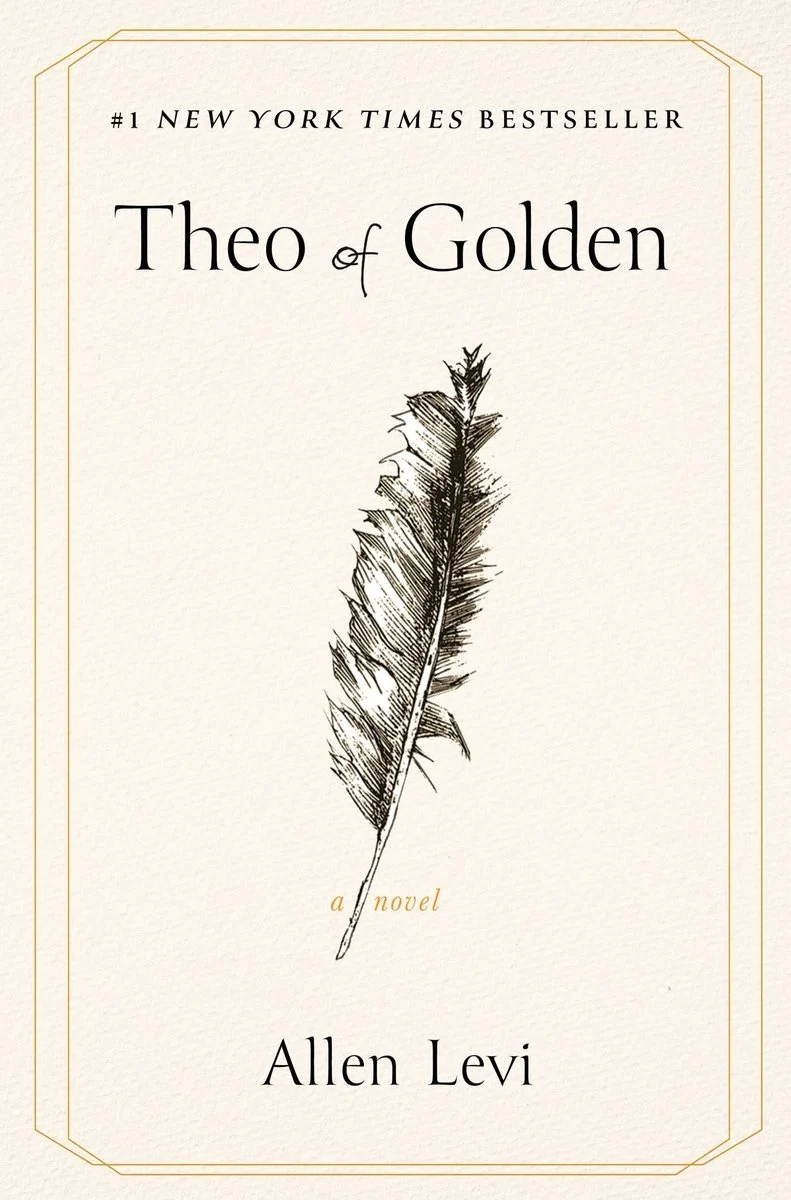
THEO OF GOLDEN by Allen Levi
Allen Levi’s remarkable journey to the best seller list reads like fiction itself. A 69 year old attorney and songwriter self published this novel in 2023 with no intention of wide distribution. Through pure word of mouth, Theo of Golden became a commercial phenomenon, eventually reaching No 1 on the NYT paperback fiction list. He is a native of Georgia and the fictional town of Golden has an autobiographical vibe- capturing Levi’s home community. I think the grassroots success of the book reveals much about what truly appeals to a general reading audience. A good lesson for those blue blood publishing houses.
The plot is deceptively simple. Theo, an elderly Portuguese man arrives in the small Georgia town of Golden. His purpose is unclear and we don’t learn his last name or his true identity until the closing chapter. He is a mysterious fellow with an unstated agenda. He is very social and begins his stay with a visit to the local coffeehouse. He discovers ninety two pencil portraits hanging on the walls and begins to purchase the works one by one. He then contacts the subject of each portrait, invites them to a chat session in the town square and then gifts the portrait to the subject. The meetings turn into intense personal encounters where the inquisitive Theo learns the deepest sorrows, insecurities and ambitions of the town’s citizens. The personalities of Theo’s new friends are radically different and Levi develops interesting psychological profiles- all within the framework of deep discussions about family, friendship, art, music and what constitutes a good life.
The character of Theo defines the narrative. He is a wonderful person. Frankly, I concluded that Theo was essentially Jesus of Nazareth taking a much needed vacation in Georgia. He is kind, decent, patient, intelligent, wise, a lover of the arts and an extraordinary listener. He could have been an insufferable and sanctimonious character but Levi brilliantly provides us enough of Theo’s life history - his sophisticated background, his wealth, his education and his international travels- to make him believable. He is not shallow- he is deep. The supporting cast, while generally appealing, are less developed. Each of Theo’s conversational partners represents a societal challenge: PTSD, homelessness, mental illness, child loss, poverty, professional frustration and loneliness. Theo drills down on the sources of their sadness and frustrations and inspires them to be their best selves. They function more as symbols than fully realised people. They may be one dimensional but they are suitable subjects for Theo’s acts of grace. Sentimental yes- a tear jerker at times - but Levi closes the circle and holds it all together very effectively .
The book’s inspirational power is remarkable given its endless catalog of sorrows. We experience dead spouses and children, war crimes, maimed youth and genuinely evil antagonists including a violent boyfriend and a murderous drunk mob. Levi’s prose is beautiful in describing art, music and nature. Overall, he would have benefited from an editor’s discipline because many passages are repetitive and overlong. Yet the book succeeds despite its literary limitations. It will not make the pantheon of great literature, but it does deliver a strong emotional and thought provoking experience. The “love your neighbour” and “smell the roses” message lands squarely, even as you recognise the manipulation. It is perfect book club fare. There is a shocking ending, but I will not spoil the surprise here. ENJOY!
THE SISTERS by Hassen Khemiri
The author is a Swedish-Tunisian novelist born in 1978. He has been a major literary force in Scandinavia for two decades and The Sisters marks his first book written in English. The novel’s ambition paid off critically: it made the National Book Award Longlist and landed on The New York Times Top Ten Books of 2025.
The novel is a 650 page saga following three Swedish- Tunisian sisters. Ina is the responsible and uptight eldest, Evelyn is the beautiful and magnetic middle sister and Anastasia is the melodramatic youngest. Their complex stories are interwoven with that of Jonas, the narrator with a family history that may or may not overlap with the sisters. The family operates under a Tunisian curse, “Everything you love, you will lose.” The novel’s seven sections cover progressively shorter time periods- from a year down to a single minute- mirroring how time seems to accelerate as we age.
I approached this book with genuine enthusiasm. Big family sagas are a genre I am drawn to and mixed heritage narrative can be educational, provocative, enlightening and fun. Unfortunately, The Sisters failed to capture me emotionally . Perhaps the lives of three exotic Tunisian sisters bouncing between Stockholm, Tunis, Paris and New York are too far from my own experiential framework. Simply, “A Bridge to Far” for WFM. I never invested in the primary characters and never found them particularly interesting or captivating. I struggled with their value system and their choices. The secondary cast of characters was also overwhelming- with family members, friends and coworkers appearing and then disappearing from the narrative. The parents, husbands and lovers were quirky at best and emotionally barren and dysfunctional at worst. It is difficult to love a book when you don’t identify with the protagonists.
Style wise, the 650 pages felt tedious. It was hard work. Khemiri’s stream of consciousness prose- long and comma free sentences- can work brilliantly but here I found it baggy, bloated and undisciplined. I admired the structural concept of the gradually compressed time periods, but the 2035 epilogue was too neat. A respectful thumbs down here. I may lack the cultural depth and breadth to appreciate what so many distinguished critics found captivating.
WHAT WE CAN KNOW by Ian McEwan
Ian McEwan occupies rarified literary air. At 77, with 18 novels behind him, including the Booker Prize winning Amsterdam and the beloved Atonement. He is a bonafide member of contemporary literature’s pantheon- cerebral, accomplished, the consummate blue blood welcomed in the best drawing rooms. His prose is tight, bit often poetic. Reading McEwan means confronting questions of art, politics, art and philosophy. He would be a superb dinner companion as long as you are in the mood to listen all evening. He is acerbic and clinical in constructing the dialogue of his characters. He is the opposite of Allen Levi’s warm blue tones- he blisters his own social set with surgical precision. Reading a McEwan novel is a borderline academic exercise.
What We Can Know operates on parallel timelines. It can be exasperating on a chapter by chapter basis. What century am I in now? Track 1 begins In 2014 with renowned poet Frances Blaney hosting a birthday dinner for his wife. As a tribute, he reads his masterwork “A Corona for Vivien” to a small gathering of artists, academics and literary figures. Track 2 is in 2119, after a climate catastrophe and nuclear war have transformed England into a water logged archipelago. There are survivors and Tom Metcalf and his wife are university academics and scholars. The narrative here its devoted to Tom’s obsessive search for Blundy’s lost poem. The early 21st century is now labelled “The Derangement”- an amusing if not subtle tell from McEwan. Tom’s fails to locate Blundy’s epic poem, but does discover the unpublished buried memoir of Blundy’s wife Vivien. We get a panoramic look at the insanity of 21st century and plot surprises arrive in quick order. Frances, Vivien and the secondary characters from the dinner party all explode in colour. They are comical, complex, cynical and dark and McEwan excoriates the hypocrisy of the literary elite with relish.
Critical reception was mixed but respectful. The New York Times called it “sophisticated entertainment.” Other critics found the characters distant and emotionally elusive. I liked the book while acknowledging it won’t be everyone’s cup of tea. The 2014 storyline was captivating and the dinner party characters were all fascinating. It is also an hilarious sendup of today’s craziness. The revelations about Vivien herself are worth the read- she is ultra cool although far from perfect. Unfortunately, the 2119 storyline fell flat for me. The search for the poem is bizarre and the destruction associated with the war and environmental calamity appears to have stripped the survivors of their personalities. Tom, Rose and their dystopian academic world are aggressively uninteresting. McEwan’s effort to pontificate and lecture on the consequences of our failure to confront climate change is dull. It doesn’t destroy the book’s impact, but it doesn’t enhance it either. The 2014 characters and their stories stand up well on their own and are the basis for a good book. The post Apocalypse overlay, while conceptually clever was not a necessary tool to make this novel work.
FLASHLIGHT by Susan Choi
Susan Choi arrived at Flashlight with serious credentials: a National Book Award for Trust Exercise and fellowships from the NEA and Guggenheim. Flashlight is her most ambitious work yet- a multigenerational family saga spanning continents. It tackles one of history’s most underreported atrocities- North Korea’s mass abduction of 84,000 South Korean and Japanese citizens. The novel received extraordinary recognition: Booker Prize Shortlist, National Book Award Longlist and one of Barack Obama’s Favourite books of 2025. Critics called it “explosive,” “devastating,” and “astonishing.” I, on the other hand, choose to wave a yellow warring flag in face of this universal acclaim. I found the book to be strange and uneven- almost operating on two separate tracks.
The first track delivers exhausting, nearly painful character studies of Louisa (the traumatised daughter), Anne (the cold and unhealthy mother) and Serk (the Korean father born in Japan who disappears on beachfront walk in 1978). Beyond Serk’s abduction, the family carries a heavy dose of dysfunction. There is estrangement from extended family, Serk’s struggle with his stateless Korean-Japanese- American identity, Anne’s isolation and failed academic career and Louisa’s troubled relationships and psychological struggles. They wrestle with illness, martial betrayals, job frustrations, adoption- a catalog of ordinary sorrows that would weigh them down regardless of the extraordinary political tragedy. These are not easy people to love- frequently depressed, self pitying and emotionally stunted. The second track is an intense, fact based examination of North Korean gulags and political kidnappings- powerful, exhausting and a tribute to Choi’s research and respect for historical accuracy.
Choi’s ambitions on the range of subject matter is staggering: the American immigration experience, Japanese bias against Koreans and a geographic sweep from multiple American regions to Korea, Japan and China. The non linear presentation combined with the 450 page length proved to be challenging and often confusing. The ending is tough, but moving. Ironically, the peripheral characters provide the novel’s most compelling moments. Tobias, Louisa’s half brother brings vitality and warmth. The supporting cast- psychiatrists, lovers, colleagues, fellow abductees- function as bridgebuilders, offering needed context and emotional texture. They connect disparate plot threads and ground the sprawling narrative. They give the main players opportunities to display humanity amidst the dysfunction and depression.
This was a strange read because loved it at certain points, but then became disoriented and disappointed when Choi changed points of views of changed plot direction entirely. The book could have been 25% shorter and told the same story with equal impact. Yet, I admire Choi’s hard nosed research and her boldness and I saw enough good signs to commit to read Truth Exercises next. I finished exhausted and impressed. Mixed bag novels are sometimes worth reading.
The preparation of these reviews has created an opportunity for self reflection What do I like to see in novels and what triggers my affection and respect? What, on the other hand, turns me off or leaves me cold? I clearly am impressed by ambition- big canvasses, serious themes and thoughtful and charismatic protagonists. I strive for an emotional connection with the characters and their life journeys. I respond favourably to craft and intelligence and like to be challenged. I will keep looking for that elusive combination of literary qualities in 2026. You should do the same!