The Iran Reckoning - 45 Years of Undeclared War
There is a temptation when analysing the current conflict between Iran, Israel and the United States to begin in the present tense- missiles falling on Tehran, the Strait of Hormuz closed, the Supreme Leader dead. Resist that temptation. The present state of affairs is incomprehensible without understanding the historical record. This conflict appears inevitable- a clash of civilisations. The West versus a radical Islamic fundamentalist regime (as opposed to a sophisticated Persian culture). How did we get here?
The Islamic Republic of Iran has been at war with Israel and the United States since the day of it founding. I am not speaking metaphorically. In blood and in calculated and deliberate policy choices made over five decades, Iran has made clear that the “Great Satan” and the “Little Satan” are its primary external enemies. It has waged war through terrorist attacks and proxy violence. The record speaks for itself. The foundational act was in 1979 when Iranian students, backed by the regime of Ayatollah Khomeini seized the US embassy and held 52 American hostages for 18 months. In 1983, Iranian backed operatives killed 241 American marines in Beirut. A second bombing that same year destroyed the US Embassy in Beirut killing 17 more Americans. The Iranians kidnapped and tortured to death the American CIA Station chief in Beirut in 1984 and hijacked TWA flight 847 in 1985 and killed an American Naval Seabee in the process. In 1996, the Iran backed Khobar towers bombing in Saudi Arabia killed nineteen American airmen and in 1998, with Hezbollah’s facilitation, al Qaeda bombed American embassies in Kenya and Tanzania and killed 12 Americans. During the Iraq War, Iranian backed militia members killed over 600 American service members and Iran was the main supplier of IED’s designed to defeat American armour. In 2023 and 2024, the CIA estimates that Iran and its proxies conducted more than 180 attacks against American interests in the Mideast. This is not a list of isolated or unconnected incidents. It is a policy designed to drive the United States out of the Mideast. A disturbing catalog of atrocities.
Iran also built a proxy empire with the purpose of harassing and ultimately destroying Israel. Hezbollah, Hamas, the Houthis, Islamic Jihad and Shia militias in Iraq and Syria received Iranian funding, training and weapons. Iran built these organisations across decades and directed them as instruments of regional policy. The Hamas October 7, 2023 attack on Israel was encouraged by Iran and Hezbollah fired missiles into Northern Israel on a regular basis. The Houthis fired ballistic missiles at Israel. Any rational Israeli leader would define the Iranian regime as an existential threat to the existence of the State of Israel.
Alongside the violence runs a a 45 year record of eliminationist rhetoric without parallel in modern political history. Khomeini called Israel a “cancerous tumour” and declared it a national obligation to support Palestinians in efforts to destroy “infidel zionists.” President Ahmadinejad called the Holocaust “a myth.” Former President Rafsanjani noted a single nuclear weapon used against Israel would “annihilate the entire country.” Israel is not being irrational when it takes such rhetoric seriously.
What the Islamic Republic has done to its own people is inseparable from its external character. The Iranian Republican Guard was constitutionally tasked not merely with external defence but with protecting the regime from its own citizens. Below it sits Basij, a paramilitary force numbering in the hundreds of thousands with a primary function of domestic surveillance and the violent suppression of dissent. Revolutionary courts impose death penalties on charges as vague as “enmity against God” and the legal system is based on torture, denial of counsel and closed hearings. This is not a free society. It is a tyranny. It is an autocracy. The numbers are unambiguous. Iran executed more of its own people than any society on earth. Over 1000 executions in 2025 alone. The condemned are political prisoners, labor activists, ethnic minorities, women and human rights defenders. The UN Fact finding mission concluded that Iran has regularly committed crimes against humanity, including unlawful killings, rapes, enforced disappearances and targeted gender prosecutions. The regime’s response was to double down- advancing legislation for harsher penalties, including death for women who defy mandatory veiling laws. In a 2022 poll, 75% of Iranians opposed mandatory hijab and 85% preferred a secular state to a theocracy. The regime’s response to calls for liberalisation has been consistent- the prison cell and the noose.
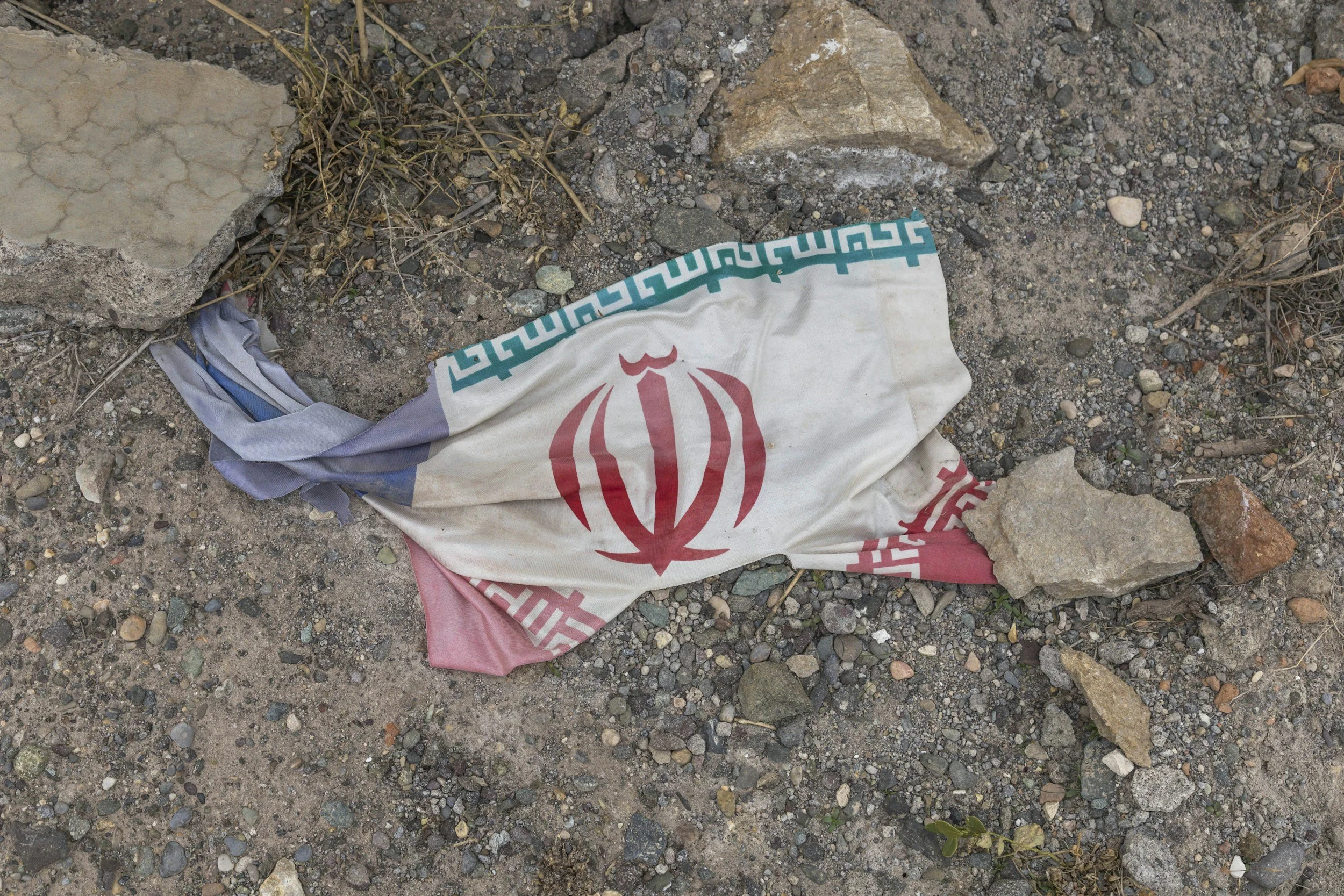
The regime does not have public mandate. It does not represent the Iranian people. Estimates of hard support for the current regime are 15 to 20 percent of the populace- a small group of ideological fanatics and a larger group of IRGC members who benefit from the system economically and whose survival depends on the system’s continuity. The regime knows these facts which is why it is so willing to use violence to maintain its power. The Iranian people are the Islamic Republic’s longest suffering victims. When American and Israeli bombs began to fall on February 28, 2026, many Iranians cheered from their rooftops and the security forces shot them for doing so. This image captures something essential about the attitude of the Iranian people and the nature of the Islamic fundamentalist regime. Keep it in mind at all times.
The Islamic Republic of Iran is a bad actor by any reasonable standard- externally aggressive, internally repressive, built on an ugly and primitive ideology and sustained by violence. Its disappearance and replacement by a government more representative of a rich Persian history and culture would be a positive development for the Iranian people, the broader region, for Israel, for the United States and for the international community. On this, the record is unambiguous. The pressing question is not whether the regime’s end is desirable. It clearly is. The question is whether the means currently being employed by the United States and Israel are an effective path to that end and whether they will produce something better or worse in the long term. Will we win? Will international stability be enhanced? Will the nuclear threat be eliminated? Will the region be safer and will the trade lanes be open?
Israel’s case for military action against Iran rests on foundations that are materially stronger than America’s. The ballistic military threat, the continuing if disrupted nuclear program, the eliminationist ideology espoused by Iran’s leaders, the proxy war waged against Israel by the “Axis of Resistance”- all support a legitimate self defence argument for Israel. Iran fired thousands of rockets at Israel in 2025. Remember, it is a state the size of New Jersey. There is an active and ongoing war. The June 2025 ceasefire was only a hiatus, not a truce. The American case is considerably weaker. The primary US interest is destruction of the Iranian nuke program and Trump has consistently asserted the program was “obliterated” by US airstrikes in June of 2025. They are years from a bomb even if they retain small mounts of enriched uranium. The ballistic missile capacity of Iran is not a threat to the United States. When the bombs fell on February 28, 2026, Iran posed no imminent threat to the United Stats and there was no legitimate self defence argument. Frankly, the US chose this war and it is probably illegal under any reasonable interpretation of international law. I remain perplexed why Trump just didn’t give the go ahead to Netanyahu and keep America’s powder dry. I assume he thought it would be easy and quick- similar to the successful 2025 attack on the nuclear facilities and the bloodless coup against Maduro in Venezuela in January. We shall see!
The goal now should be an Iranian government that abandons the nuclear program, dismantles the proxy network, stops killing its own citizens and is a responsible actor in the region. It seems clear the current regime doesn’t meet that test, but how do you do regime change without troops on the ground. I strongly suspect President Trump has not thought through the strategic challenges. Actually, I am certain of that fact. Events are unpredictable. Watch with interest and hopefully not horror. Future essays will discuss the enormous complexities of this conflict.