Europe in Crisis: Part 1- The European Catastrophe: 1914-1945
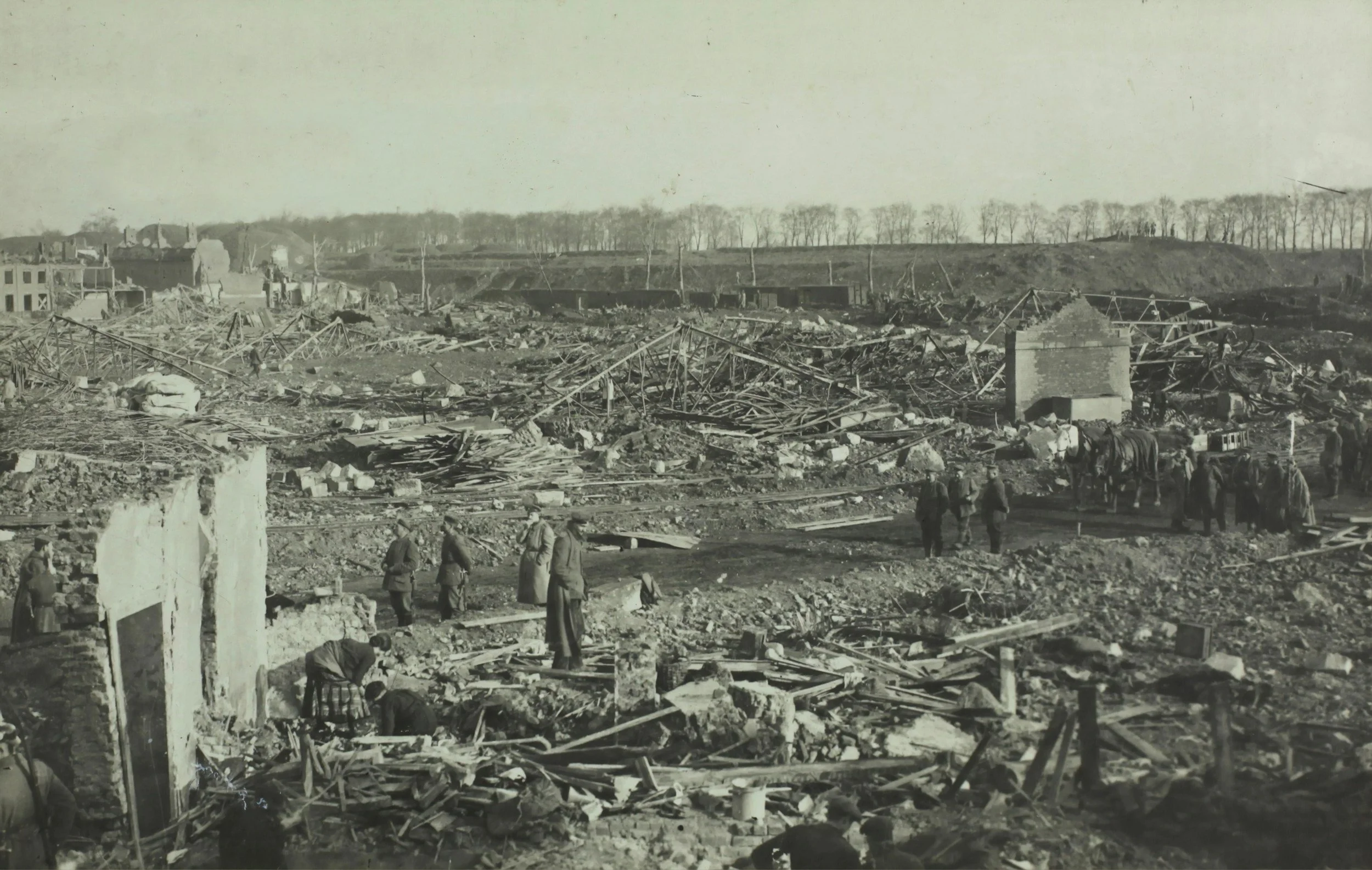
Europe in 2025 is in crisis. They are facing a demographic collapse, democracy is under assault by far right wing populist parties, economies are stagnant and lagging behind in the technological and artificial intelligence revolution, the European Union is fragile, the transatlantic alliance with the United States is under stress and the post World War order has been undermined by Russia’s invasion of Ukraine. They are facing formidable challenges. We have been living in Rome since August and are developing our own European identity. Heck, I have an Irish- European passport. We love the museums, the art, the culture and the people and cannot imagine a political universe where the relationship between the United States and Europe is permanently fractured. Things appear to be going in the wrong direction. This conflation of circumstances has inspired me to examine the status quo and evaluate the menu of options for the future. But, as always, to engage intelligently with the future, you must make a good faith event to understand the past. Simply, how did we get here? Brace yourself- a four part narrative follows. Part 1 is the European catastrophe that occurred between 1914 and 1945. Second, the European rebirth from 1945 to 1989. Third, the years of redemption, consolidation and expansion from 1989 to 2014. Finally, the years of threats, challenges and regression from 2014 to 2025.
1. THE EUROPEAN CATASTROPHE: 1914-1945.
We begin with World War I (1914-1918) which brought the death of the Old Order. It was a slaughterhouse. The numbers alone cannot the capture the extent of the horror, but they must be stated: approximately 10 million soldiers dead, 21 million wounded and 8 million civilians killed. France lost 1.4 million men from a population of 39 million- one in five French men aged 20-30 in 1914 were dead by 1918. Germany lost 2 million, Russia 1.8 million and Great Britain 1 million. An entire generation was devastated. Industrial warfare created this unprecedented carnage. Machine guns, artillery barrages, poison gas, trenches and barbed wire turned battlefields into killing zones. At the Somme in 1916, the British suffered 60,000 casualties in 24 hours. At Verdun, the French and Germans lost together over 700,000 men fighting over a few miles of desolate ground. Young men were fed into a meat grinder by callow military leadership for 4 years.
The war destroyed not just the male population, but the social fabric. Town squares across Europe bear monuments listing the dead- often dozens of names from villages of a few hundred people. Entire graduating classes at elite schools were wiped out. The losses created a demographic hole that scarred Europe for generations- millions of women who would never marry, children never born and families never formed. Pre-war Europe had been a world of emperors, kings, aristocrats, rigid class structures and inherited privilege. It was world of formal manners and an abiding faith in progress and civilisation. The war destroyed all of it. Europe’s cultural confidence was shattered. Before 1914, the continent believed in the superiority of its civliization. After four years of mechanised slaughter, such faith and hope seemed absurd.
Politically, the war was an earthquake, permanently changing the way the continent was governed. Four great empires that had shaped Europe civilisation for centuries collapsed within months of the war’s end. The German empire disintegrated as Kaiser Wilhelm abdicated and fled. The Austro-Hungarian Empire, the Hapsburgs- that had ruled Central Europe for 600 years fragmented into Austria, Hungary, Czechoslovakia and Yugoslavia. The Russian Empire collapsed in revolution with Tsar Nicholas and his family murdered by the Bolsheviks. The Ottoman Empire finally expired, its Middle East empire becoming British and French mandates. They were not merely political changes- they represented the complete destruction of a social and cultural order that had existed for centuries. It was an act of self destruction unmatched in history.
2. THE INTERWAR CRISIS: EUROPE UNRAVELS (1919-1939).
The Treaty of Versailles was meant to ensure permanent peace. Instead, it guaranteed a future war. Germany was forced to admit guilt for the war’s outbreak, stripped of territory and saddled with reparations that would paralyse Germany’s development for generations. Beyond economics, Versailles created a narrative that German nationalists, particularly the Nazis, exploited ruthlessly. The new borders created a host of new problems. Multi ethnic states had built in tensions. The League of Nations lacked enforcement powers and the United Stated refused to join- it became a noble idea without teeth. Germany suffered hyperinflation and the mark collapsed. Life savings evaporated overnight and the middle class- the backbone of any stable democracy- was destroyed economically and psychologically. The Wall Street crash of 1929 and the ensuing Great Depression hit Europe in a devastating fashion. German unemployment reached 30%- over 6 million people. Britain had 20% unemployment and international trade plummeted by 70% as nation’s erected protective tariff walls. Globalisation which had exploded from 1900 to 1914 was reversed. Nations turned inward and millions starved. Poor leadership everywhere!
The economic crises created a political maelstrom. Democratic governments seemed incapable of responding effectively and across Europe people turned to extremist movements that promised radical change. Lots of bad things began to happen very quickly. Fascism conquered Italy in 1922 and by1925 Mussolini and his Blackshirts had created a dictatorship. Hitler’s Nazi Party was a fringe movement until the Depression. In 1928, they won 3% of the national vote. By 1933, they were Germany’s largest party with 37% of the vote and Adolf Hitler became Chancellor. Within months, he had established a totalitarian state. Within 5 years he absorbed Czechoslovakia and Austria and built a powerful military. In Russia, the Communists under Lenin, and then Stalin consolidated power and ushered in a parade of horrors. Forced collectivisation created the Great Famine which killed 4-5 million Ukrainians. The Great Terror saw 750,000 executed and millions sent to Siberian gulags. Soviet society became an armed camp, brooking no dissent. Beyond Germany, Italy and the USSR, authoritarian regimes proliferated across Eastern and Southern Europe. Spain had a civil war from 1936 to 1939 which was dress rehearsal for WWII. Franco and the military overthrew a democratically elected government. Anti Semitism raged on the continent. The Nazis made it central to their ideology and embarked on a ruthless campaign against the Jews: economic boycotts, Nuremberg laws stripping citizenship, Kristallnachts’s organised pogroms and forced emigration. Poland, Romania and Hungary also imposed discriminatory laws and the West closed its borders to Jewish refugees.
The western democracies responded poorly. Britain and France had the power to disable Hitler early, but lacked the will. Chamberlains’ “peace in our time” statement after the Munich Conference in 1938 epitomised the democracies’ failure of nerve. Ultimately Hitler faced no serious resistance as he rearmed and then began annexing other countries and territory. By 1939 the European post WWI structure had collapsed. The League of Nations was impotent and the Nazi-Soviet Pact stunned the world. Germany invaded Poland in September 1, 1939 and Britain and France declared war on Germany. Europe was at war again just 21 years after “the War to End All Wars.”
3. WWII: EUROPE DESTROYS ITSELF (1939-1945).
If WWI was unprecedented, WWII was apocalyptic. Total deaths of 70 to 85 million, perhaps 3% of the world’s population. The Soviet Union lost 27 million people, nearly 14% of its population. Poland lost 17%, Yugoslavia 10% and Germany 9%. It was a total war that targeted civilians from the outset. The Nazi siege of Leningrad lasted 872 days and killed 1 million people through starvation. The German army deliberately starved 3 million Soviet POW’s. Strategic bombing of urban areas became routine- the London blitz, Dresden, Hamburg. The Eastern front was a war of extermination. Hitler’s Hunger Plan aimed to starve 30 million Soviets to create living space for Germans. The Nazis embarked on a “Final Solution” campaign against the Jews. They pursued and industrialised genocide which resulted in the murder of 6 million Jews- two-thirds of European Jewry. Jewish communities that had existed for centuries were annihilated. The war left Europe’s cities and infrastructure in ruins. Warsaw was destroyed completely and Berlin, Hamburg, Cologne and Dresden were wastelands of rubble. Stalingrad was obliterated in block by block fighting. Railways, bridges, factories, and ports lay destroyed. Infrastructure built over centuries was reduced to ash in 6 years of insanity.
By May 1945 when Germany surrendered, European civilisation as an independent global force was finished. The continent that had dominated the world for centuries lay prostrate- basically an act of suicide. The United States and the Soviet Union were now superpowers. Europe was divided between them, occupied, dependent and its fate in the hands of others. Britain, a supposed winner was broke and its colonies were in open revolt. Proud France had been humiliated and was insecure. The German philosopher Karl Jaspers wrote: “We have lived through the catastrophe of Europe…Everything precious in the common heritage of mankind had been destroyed, confused and debased.” Thirty one years- 1914-1945 had reduced Europe from Master of the Universe to a sickly and depressed dependent. Populations were displaced, families destroyed, the economic systems shattered and any recognisable political order had left the building. The very idea of a European civilisation had been discredited- how could a society that produced Auschwitz claim any moral authority. The catastrophe was so complete that what would rise from the ashes was uncertain and that anything positive could emerge in the new term seemed almost impossible.
YET, from this absolute nadir would come one of history’s most remarkable transformations- a rebirth- but only because the Europeans, with American help, made deliberate choices that would revitalise Europe economically and insure that the horrors of war would not return to the continent. We will review that journey in Parts 2 and 3 of this essay. Stay tuned.