I have been periodically identifying books that shaped my thinking during my formative years- works that fundamentally altered how I understood the world and my place in it. In shorthand- my All Time Best Books list. Richard Klugar’s Simple Justice has earned a place on that list- a book that revealed the meticulous legal craftsmanship and extraordinary personal courage required to dismantle America’s Jim Crow apartheid system. It inspired an appreciation for the power of the law and the critical role of principled lawyers in our system. My “stand alone” review of Simple Justice is coming, but the process triggered a desire to examine the broader literature of the Civil Rights movement and that is where we begin today. Buckle up!
My motivation for addressing this topic now is that I am convinced that a revisitation of the principles of the civil rights movement has become absolutely necessary. An urgent reckoning is required! We live in a moment of profound historical amnesia and are witnessing an organised and active backlash against the movement’s achievements. The Supreme Court has systematically dismantled affirmative action in college admissions, gutted the Voting Rights Act pre-clearance requirements and signaled openness to further rollbacks. Legislative and executive branch attacks on diversity, equity and inclusion programs proliferate across states and institutions. Perhaps most troubling, surveys reveal that younger Americans - who never experienced legalised segregation, often lack a basic understanding of what the Civil Rights movement was about and what it achieved. Here, I make a good faith effort to identify the essential books that preserve this history. This essay provides readers with a “must read” bibliography: the works that capture the movement strategies, document its achievements, confront its limitations and at their best offer both instruction and inspiration for our own times.
The American Civil Rights movement of the 1950’s and 1960’s represents one of the most extraordinary democratic uprisings in modern history- a non violent revolution that fundamentally restructured American law, politics and society. The movement’s genius lay in its coordination of three interdependent strategies, reinforcing one another in a campaign that would ultimately dismantle America’s apartheid system.
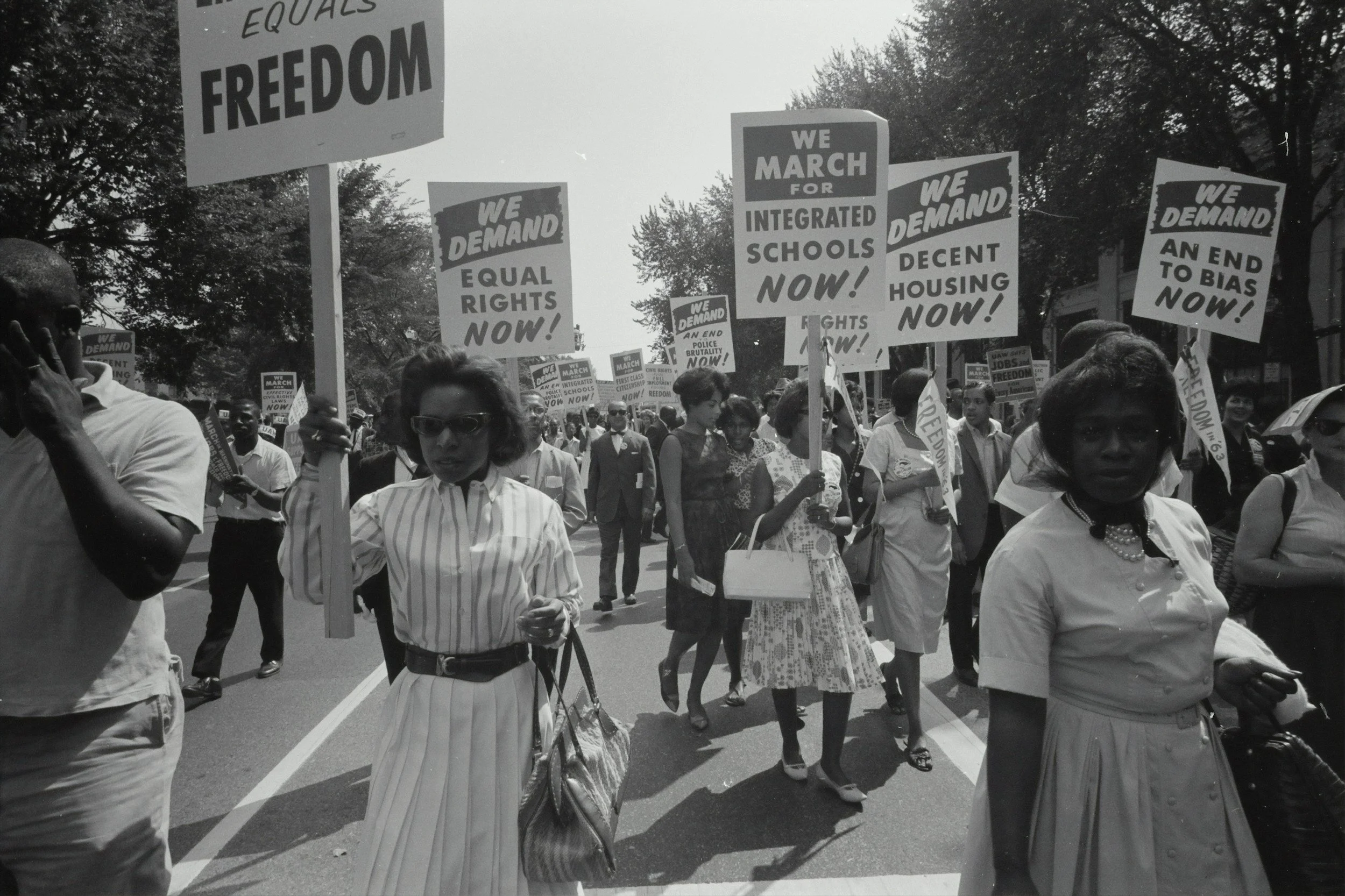
Strategy No 1 was public pressure- basically creating an atmosphere of moral witness. The movement’s public demonstrations constituted political theatre designed to expose segregation’s cruel and violent underpinnings to national and international audiences. The Children by David Halberstam brilliantly chronicles how Nashville students developed the sit-in tactics that revitalised a rather dormant movement. These young activists understood that disciplined non violence- absorbing beatings, arrests and humiliation without retaliation would create the creative tension that forced the national community to confront the realities of Jim Crow. The goal was to open eyes, change minds and move hearts. Halberstam’s intimate portrait of eight students who transformed the movement is brilliant. They, particularly John Lewis and Diane Nash, were more courageous than the more senior movement leaders and saw the need to change the narrative. They are “heroes” and their early victory in integrating Nashville lunch counters established a template that would spread across the South.
Walking with the Wind by John Lewis provides the inside account of how SNCC organisers planned campaigns with unrelenting attention to logistics, non violence training and media strategy. Lewis’s description of “Bloody Sunday” on Selma’s Edmund Pettus Bridge reveals how movement leaders calculated that violent attacks on a peaceful protest would shock the nation’s conscience and create enormous pressure for federal intervention. They were right!!
Parting the Waters by Taylor Branch documents Martin Luther Ling’s evolution as a strategist who used carefully orchestrated marches to manufacture political crises that created the opportunity for political pressure and action. Branch’s monumental trilogy- completed with Pillar of Fire and Canaan’s Edge - shows how King and other leaders constantly adapted tactics based on local conditions and national political opportunities. The Birmingham campaign succeeded precisely because Police Commissioner Bull Connor could be counted on to respond with spectacular and unreturned violence that would play disastrously on television.
Strategy No 2 was a disciplined legislative strategy - mastering the art of political persuasion.This silo ran parallel to the street demonstrations and protests with a goal of transforming moral pressure into law. Bending Toward Justice by Gary May provides the definitive account of how movement leaders leveraged the Selma crisis to procure the passage of the Voting Rights Act of 1965, the most consequential civil rights legislation in American history. May documents the intricate negotiations between civil rights leaders and the Johnson administration, revealing how carefully timed protests strengthened the President’s hand against southern congressional opposition. May shows how the movement leaders developed an understanding of the legislative calendar, congressional power dynamics and the need to increase public pressure during negotiations. Branch’s trilogy also documents how Birmingham violence in 1963 finally pushed a cautious Kennedy to propose what would become the Civil Rights Act of 1964, the most sweeping civil rights legislation since Reconstruction. These legislative victories codified a civil rights regime that fundamentally expanded the federal government’s power to protect individuals against state oppression and discrimination.
Strategy No 3 was at the judicial level- a decades long campaign to use federal courts to dismantle segregation’s legal architecture. Simple Justice by Richard Klugar sets the standard here. It is the definitive account of the NAACP Legal Defense Fund’s methodical challenge to Plessy v Ferguson, culminating in the Brown v Board of Education Supreme Court decision declaring that racial segregation in elementary schools violated the constitutional rights of black children. The book documents how Thurgood Marshall and his team travelled nationally to find plaintiffs willing to risk their livelihoods and personal safety to challenge segregated schools. The book also focuses on Chief Judge Earl Warren’s political skill in forging a unanimous consensus among justices with wildly divergent views, crafting language that made segregation’s continuation impossible to defend. A tour de force!
Warriors Don’t Cry by Melba Pattillo humanises the judicial strategy by showing what implementation meant in practice. Beal’s harrowing account of integrating Little Rock’s Central High School reveals the extraordinary courage required to transform legal principle into lived reality. She and the other black teenagers faced daily violence, constant threats and psychological warfare. The book captures the gap between a legal victory and actual societal change. Real people need to step up on the ground. President Eisenhower’s reluctant deployment of federal troops to enforce Brown also teaches us that judicial decisions mean little without Executive enforcement. Who sits in the Oval Office matters- they set the tone.
The Civil Rights movement three pronged strategy produced revolutionary changes. Within a single decade, America dismantled a comprehensive system of racial apartheid. The full scale of the breathtaking changes are captured in Eyes on the Prize by Juan Williams. This epic work documented how the legal changes transformed every aspect of daily life- integrating schools, lunch counters, workplaces and voting booths across the nation. The political transformation was dramatic. The Voting Rights Act enabled massive increase in black voter registration and the election of black officials at every level of government. By the 1970’s southern cities that had violently resisted integration were electing black mayors. The political empowerment grew over subsequent decades and the United Stated elected an African American President in 2008 and reelected Barack Obama four years later. AMAZING!
The written literature is supplemented by powerful programs in the visual media, I recommend Eyes on the Prize Henry Hampton’s documentary series which combined archival footage with participant interviews. 4 Little Girls is Spike Lee’s documentary about the Birmingham church bombing and vividly portrays the human costs associated with the movement and the outright terrorism that buttressed segregation. Selma, Ava Du Vernay’s dramatic film focuses on the Selma campaign and offers us a complex MLK and shows the tensions between the SCLC and SNCC activist camps. Reconstruction: America After the Civil War is a brilliant series from Henry Louis Gates and provides essential historical context by showing how the betrayal of Reconstruction principles led to Jim Crow- the system that would be challenged by the Civil Rights movement a century later. A special place for the Dawn Porter documentary John Lewis:Good Trouble which connects Lewis’s civil rights activism to his later Congressional career. A man to admire - a MAN IN FULL- in my estimation.
As America experiences a systematic rollback of the civil rights gains today, this literature becomes and act of resistance itself. These books and movies testify that progress is possible, but not inevitable. They are a guide to future action. It prevents a comfortable amnesia about the sacrifices necessary to bend the moral ark of the universe toward justice. More fundamentally, this body of work testifies to the human capacity for both evil and transcendence. The same species that created slavery and segregation produced Rosa Parks, Martin Luther King, Diane Nash and John Lewis. The same nation that tolerated lynchings and disenfranchisement elected Barack Obama. The literature holds these contradictions together, rebutting easy optimism or paralysing despair. The positive message is that previous generations faced seemingly insurmountable obstacles and prevailed through intelligence, courage and solidarity.
These books don’t prettify history but they do honour their subjects full humanity. The works celebrate extraordinary courage, but don’t offer false comfort. Most importantly, the literature preserves the voices, strategies and moral witness of those who believed America could become the democracy it claimed to be- and risked everything to make it so. They deserve to be remembered!